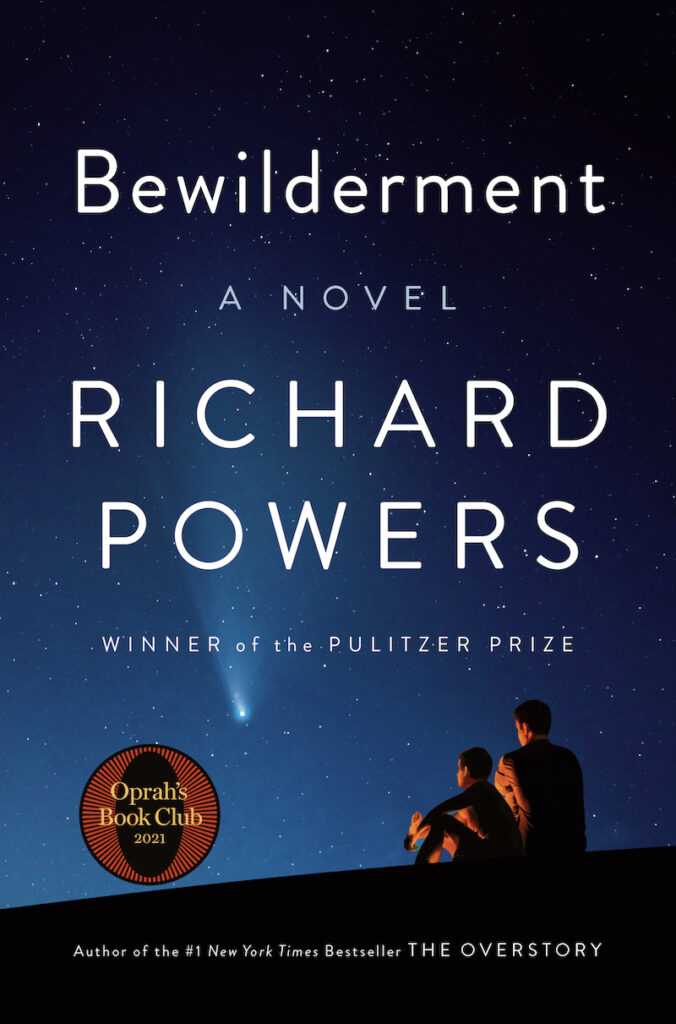
Astrobiologist Theo Byrn searches for life in the universe. Even as a child he imagined different planets, sketching out their topography, geology and biology. Now he models potential varieties of planets, based on the latest research, and what sorts of life might be expected to develop there. His models will be used when—if—those life forms are discovered or make contact with us.
But it is as a father that we most get to know Theo. His 9-year-old son Robin is brilliant in his own way, but has trouble with social expectations and is bullied in school. When he’s interested in something, he learns everything about it, but when he isn’t, he stops paying attention.
Theo doesn’t want Robin medicated. He can’t bear the idea of blunting this extraordinary child’s mind to make him fit better into school. To do so would also betray the boy’s mother Alyssa who’d insisted that Robin be allowed to develop his capabilities. An animal rights activist, she had been killed two years earlier when she swerved to avoid hitting an opossum. Robin shares his mother’s passion for trying to save creatures from extinction.
Robin’s passion is one of the joys of the book; the various ways it manifests are astonishing and thought-provoking. Another joy comes from the planets that Theo describes for his son as bedtime stories and sometimes directly for the reader. Such imagination!
What does it mean to raise an exceptional child? Does it mean ignoring all the science? All the social rules? All the well-meaning teachers? Would I feel as though I’d failed my child? Parental guilt is bottomless. And anyway how many ways are there to be exceptional? The kind of intelligence classrooms recognize? Or creativity that looks beyond what is to what could be? Or a sensitivity that is tuned beyond what most of us understand?
I have struggled this with this myself. As a parent you don’t want to crush what is special about your child, yet at the same time you don’t want them to be excluded from the community around them. Where is the balance?
Perhaps your male child has a sweetness that is not acceptable in our world. Perhaps your girl child has a vulnerability that scares you out of your wits. What are the consequences for trying to be true to your child and let them develop as they are wired to do? How much danger are you putting them in?
Don’t we need them? These amazing young people who are in touch with ideas and proposals that we never even imagined? These young people who will be our doctors and lawyers and friends?
Theo says, “I wanted to tell the man that life itself is a spectrum disorder, where each of us vibrated at some unique frequency in the continuous rainbow.” But Theo also says, “No doctor can diagnose my son better than I can.” Such contradictions are human, aren’t they? I spend a lot of time with a nine-year-old these days, so Robin, while also contradictory, seems well-drawn to me. He veers between astonishingly mature comments and sentimental platitudes that he’s just discovered. He can throw destructive tantrums or spend hours creating a detailed work of art.
One of my library’s patrons wrote on the comment form for this book that there was so much bad news already that they didn’t need more, no matter how much they liked his previous book The Overstory. True, this 2021 novel takes the then-current political situation farther and presciently shows the kind of destruction of the country’s science infrastructure and capabilities that actually occurred four years later. Meanwhile, the climate crisis worsens every month while corrupt politicians bloviate about bathrooms.
Of course I share Robin’s heartbroken despair at the species that are going extinct and the natural places that are being destroyed. While I am delighted by the many and detailed worlds that Theo comes up with, they will not save us. Only we can do that.
Have you read another book by Richard Powers? What did you think of it?