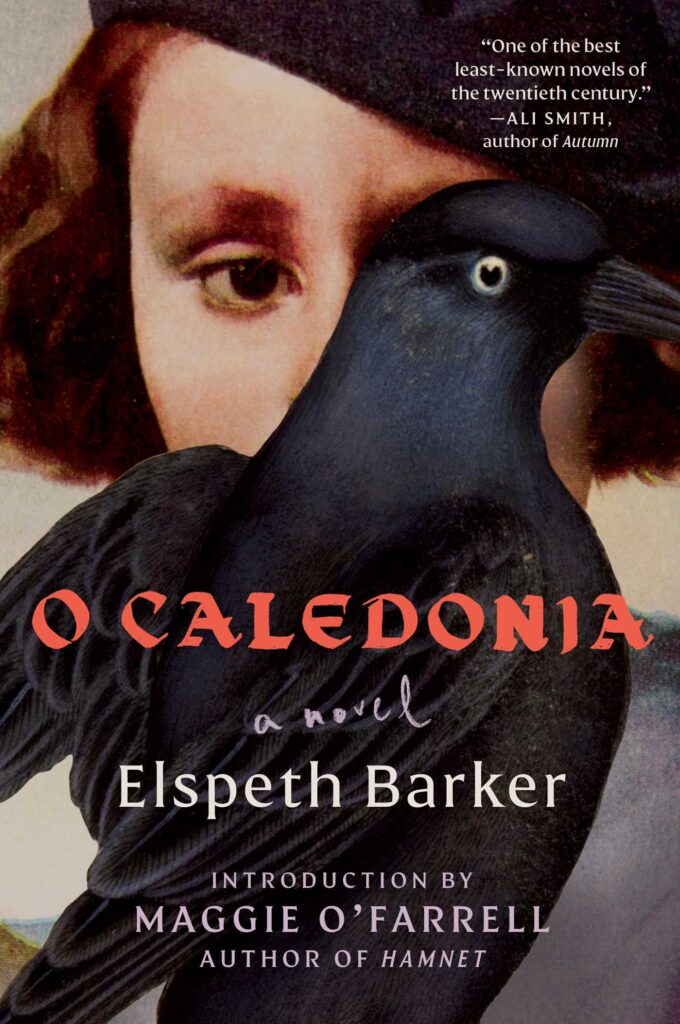
O Caledonia, by Elspeth Barker

You think you know where you are when this novel begins. “Halfway up the great stone staircase which rises from the dim and vaulting hall of Auchnasaugh there is a tall stained-glass window.” At night, the moon shines through the dying cockatoo in the window and

casts his blood drops in a chain of rubies onto the flagstones of the hall. Here it was that Janet was found, oddly attired in her mother’s black lace evening dress, twisted and slumped in bloody, murderous death.

But this is no ordinary murder mystery. Who killed sixteen-year-old Janet hardly matters. Instead, we are taken back to Janet’s birth in the 1940s, the first of five children and the least-loved.

Her life makes for a dark and sometimes funny tale of isolation and misadventure. Unlike her siblings, Janet never quite grasps the social rules. She makes disastrous mistakes, and other times acts upon what seem like logical ideas, such as burying the new baby in earth and leaves.

It was a rigorous life, but for Janet it was softened by the landscape, by reading, and by animals whom she found it possible to love without qualification. People seemed to her flawed and cruel.

The only sympathetic person is her strange, older Cousin Lila, who lives at Auchnasaugh, sipping whisky and smoking all day. Like Janet, she prefers animals to people. The whole family is pretty eccentric, but Lila outdoes them all.

Auchnasaugh, the field of sighing, took its name from the winds which lamented around it almost all the year, sometimes moaning softly, filtered through swathes of pine groves, more often malign, shrieking over the battlements and booming down the chimneys, so that the furnace which fed the ancient central heating system roared up and the pipes shuddered and the Aga top glowed infernal red.

I couldn’t help feeling for Janet as a victim of the stereotypes and restrictions around being a woman in postwar Calvinist Scotland. Whether it’s the expectation that girls will be prim and proper—and obedient—or the insistence that the only life for a woman is marriage and children, Janet simply doesn’t measure up.

No wonder she finds herself an outsider, not only at home but also at school and church. Janet is so much an outsider to her family that they bury her in a different graveyard, so they won’t be plagued with her in the afterlife. Only her pet jackdaw mourns for her.

The title comes from the epigraph, a quote from Sir Walter Scott. Caledonia is the Roman name for the part of Scotland where Janet lives, the part that remained outside Roman jurisdiction. Stern, wild, poetic: It fits Janet’s story. So too does the surprising and shocking cover.

When I finished the book, I turned back to the beginning and read it again. Mostly I wanted to savor the unusual yet precise prose.

Janet began to hate the sea. There was so much of it, flowing, counter-flowing, entering other seas, slyly furthering its interests beyond the mind’s reckoning; no wonder it could pass itself off as sky; it was infinite, a voracious marine confederacy.

I want to keep quoting huge chunks of this book. In her introduction, Maggie O’Farrell says that when she used to teach creative writing, she would read aloud the opening chapters, emphasising Barker’s word choice, imagery, and sentence structure. First published in 1991, O Caledonia was republished in 2022 with O’Farrell’s introduction.

Dark yet funny, realistic yet fantastical: This haunting book is a perfect October read.

Can you suggest another perfect October read?
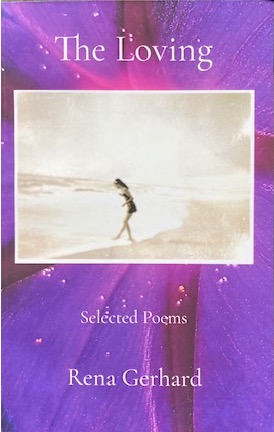
The Loving, by Rena Gerhard

Rena Gerhard began writing poetry as a child in the 1940s. Later, many of her poems were published in Musings, the poetry column in her local newspaper, The Reading Eagle. She continued to write until her death in 2014. Now her son and fellow poet Fred Gerhard has issued a selection of her work from all these phases of her life.

With such a breadth of time, the reader can see how her style developed as she matured while also recognising how she retained the elegant simplicity and emotional impact of her earlier work. Some consistent themes emerge.

Many of the poems are suffused with her love of nature and its rhythms, such as in “Night Walk” in which she describes a maple tree as “sleeping standing up / Having dreamed her children / to the wind.”

Alive to the magic of childhood, she speaks of the moon in “Midnight Forest.”

That whispering sigh above your head,

Know you what it means?

A rustling leaf—long brown and dead

Or th’ song of Fairy Queens.

Other poems are drawn from daily life, such as “Supper Will Be Late.” Or “Mystery” whose two lines capture a moment we can identify with: “Don’t you just hate when you clean out a drawer / And not all things fit that fit before!” The humor here can be found in many of the poems. One of my favorites is “Dancers” which begins:

Dinosaurs dance sedately.

Because of their weight and their delicate toes,

Their walnut-sized brains and their clattering clothes,

Dinosaurs dance sedately.

Subsequent stanzas continue the fun. As a dancer myself, I perk up every time she refers to dancing in a poem. When you take to the floor and begin moving to the music, you have to feel the rhythm in your body. Rena’s dance experience is evident in the confident rhythms she chooses for her poems.

Her imagery, too, is surprising and fresh, such as when she describes a light snow as “heirloom lace” spread over a “tablecloth world.” She continues the motif with “Finest stitch of sparrow hops / link bush to branch to porch to perch”  and “Squirrel-leap and rabbit dart / basting stitch the path of paws.”

You can see her love of words in poems like “Absurd” where she says, “What a wonderful word! / A laugh that bursts / Like water balloons.”

Although I never met Rena, I feel I have a sense of her based on her humor and love of nature as well as her sure handling of concision and emotion in these poems. In “Poem to  Old Writings” she looks back over her life and is grateful to be reminded of who she used to be and whom she has become. I’m grateful to her son for sharing these poems.

Have you ever looked at a poet’s collected work and considered what has changed over time and what has stayed the same?

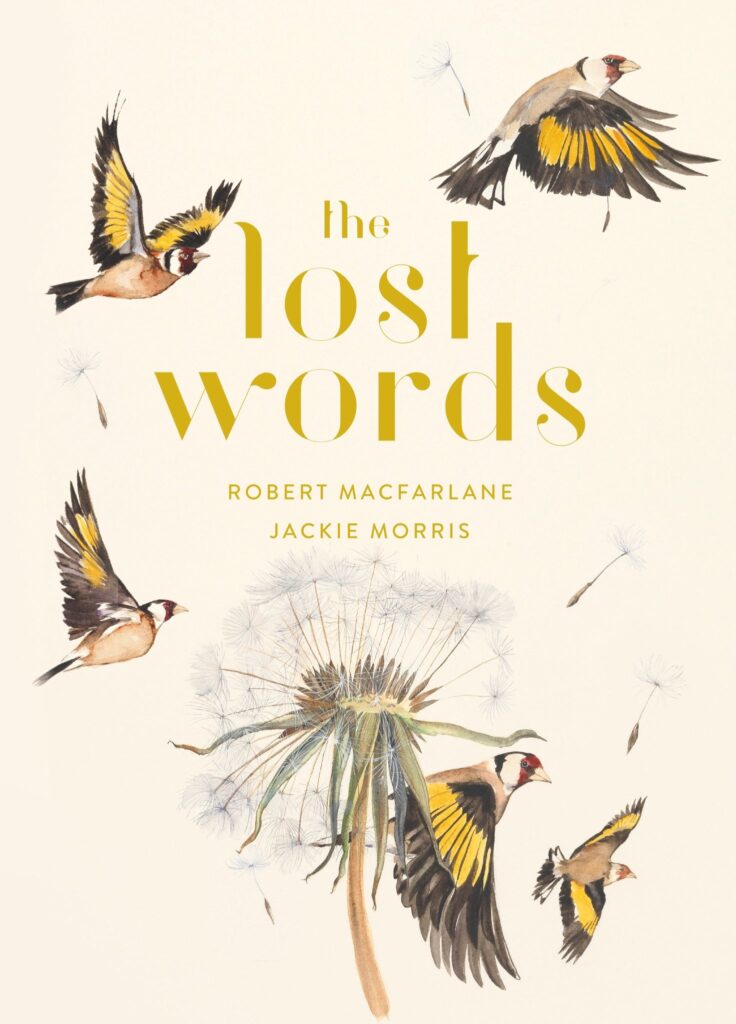
The Lost Words, by Robert MacFarlane and Jackie Morris

When the Oxford Junior Dictionary was updated, it was found that around forty common words had been dropped—all of them words to do with nature—and their place taken by words, many of which have to do with the online world.

In response, MacFarlane and Morris came together to create what they call a spell book to help young readers rediscover the natural world. Unless we experience and learn to love the world of nature around us, we will not work to save it.

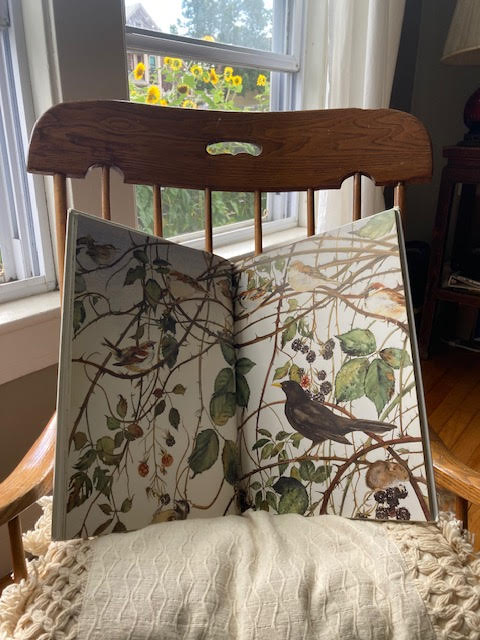
In this large-format book, we first see the creature or plant’s environment empty of everything but a scattering of letters. Some of the letters are a different color and spell out what is missing. Then comes the illustrated spell—an acrostic celebrating and summoning the creature or plant—followed by a stunning double-page illustration of it restored to its habitat.

This is the most beautiful book I’ve seen in a long, long while. Jackie Morris’s illustrations are simply stunning. I’ve even propped it open on my grandmother’s rocking chair so I can glance over at it frequently.

Robert MacFarlane’s spells—acrostic poems—summon the lost creature or plant through the music of words, using imagery, alliteration, internal rhyme, personification, and other poetic devices, including Anglo-Saxon kenning. A few excerpts:

“Hold a heartful of heather, never let it wither, / Even as you travel far from crag and river.”

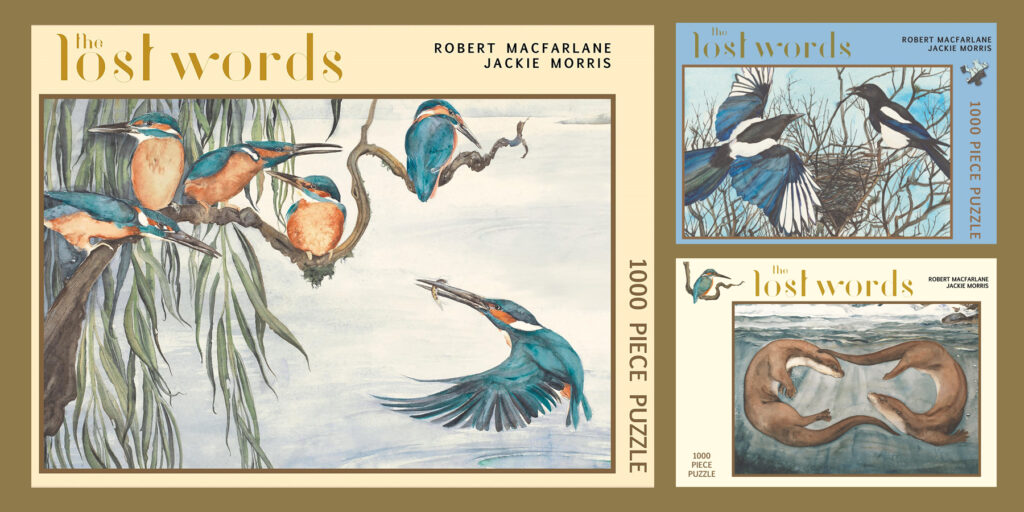
“Kingfisher: the colour-giver, fire-bringer, flame-flicker, river’s quiver. / Ink-black bill, orange throat and a quick blue back-gleaming feather-stream.”

When I read this book to the littles in my life, they were surprised that anyone would think children wouldn’t know—or wouldn’t need to know—these words. The young ones talked eagerly of the bramble berries in their yard and the otters and herons they’ve seen. They wondered how children in even the most urban environments would not be familiar with dandelions. One of the littles is even named Willow, so was indignant that their name would be discarded.

The only one new to them was conker, since in the U.S. that word is not used for the seed of the horse chestnut, something they do know well since they love collecting the seeds from a horse chestnut near us. As far as I know, the children’s game using conkers is not played here in the U.S. My littles were interested in the description, but not eager to try it.

The book has won many awards and moved out into the world in various formats. I applaud its mission of connecting young people to our natural world and in the process helping to save that disappearing habitat. Most importantly it is a feast for the eyes and, when read aloud as it begs to be, for the ears as well. May its spells work.

What children’s picture book have you loved for the illustrations as well as the words?

Jigsaw puzzles available from the book’s website.

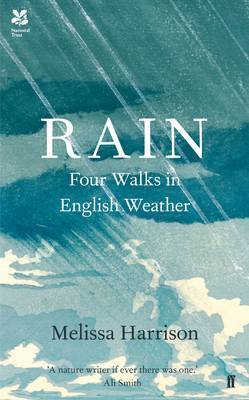
Rain, by Melissa Harrison

While rainy weather sends most people indoors, Harrison suggests that “if you only ever go out on sunny days you only see half the picture, and remain somehow untested and callow.”

In this quiet gem of a book, she takes us on four walks in the rain in different parts of England. In January we visit Wicken Fen in Cambridgeshire; Shropshire in April; the Darent Valley in Kent in August; and Devon’s Dartmoor in October. Different landscapes, different seasons, yet all of them reveal how our world is different in the rain, as well as its effects on us.

For some of us, rain induces a pleasant melancholy; one friend of mine calls it a blown-flame mood: not the thrill of fire but the lingering scent that turns us inward. Memories open like petals, and the past is no longer a foreign country.

Wet weather offers other rewards to walkers willing to brave it. Aromas become more intense: The difference between walking in a pine forest in dry or wet weather is astounding. Some creatures emerge while others hide. The air may be softer on your skin, the sounds more mysterious.

When the Kent sky—already overcast—darkens, it does so suddenly. A restless wind gets up, bullying the muggy August air so that the ripe wheat shifts uneasily, gusts pushing its golden surface this way and that like a nap . . . The downpour that follows seems to fall with more force than mere gravity could provide, and as lightning flickers—first distantly, then much closer—and thunder renders the sky, I weigh the risks of standing beneath the bankside trees against the discomfort of getting drenched.

Harrison explores the way rain transforms the landscape whether it be by storms or floods or the minute trickling of drops upon stone. She calls our attention to the way minerals create soil from which grow the plants and trees that support insect, bird and animal life.

The old drystone walls bounding the road where we walk are shaggy with moss and dog lichen and pinned with medals of pennywort and the delicate buttonholes of maidenhair spleenwort, all beaded silver with rain. A few paces ahead of us a stonechat perches on the top of the wall and flicks his wings insouciantly. The call he makes echoes almost exactly the clash of wet pebbles loosed from the disintegrating road surface under our boots.

As a genre, travel writing encompasses a wide range of formats. Most commonly its purpose is to encourage readers to visit places near and far. These pieces could be simply description of a place with suggestions for dining and lodging.  They could highlight single endevours such as a farm that offers field-to-kitchen cooking classes. Or they could be a biography of the place, so to speak, incorporating history and legends, famous and not-so-famous residents, hidden gems and well-known sites which come together to portray the personality of the place.

Travel pieces may also be a story about the author’s particular experience there, their exploration and encounters with places and people and how they are changed. I’m thinking of Colleen Kinder’s Letter to a Stranger: Essays to the Ones Who Haunt Us and associated website. Or a  travel book can be a record of the travels of the author’s mind as they move through the world, as in W.G. Sebald’s The Rings of Saturn.

Fusion with memoir is common because our experiences are grounded in certain locations, such as in Martha Gellhorn’s Travels with Myself and Another or Edward Parnell’s Ghostland which combines travel with literary review and memoir. With fiction, as well, we sometimes say the location is a character in the story.

This gentle series of four walks is none of these. To me it felt like a guided meditation, as though the author simply invites me along on a walk with her. Look over here; feel this leaf; does this remind you of something from your childhood?

In amongst the luminous descriptions are tidbits of history, poetry, memory and story. I especially enjoyed hearing about the volunteer-driven British Rainfall Organisation, “a quintessentially eccentric body and one of the first examples of what we now call ‘citizen science’.” Harrison also incorporates legends and folklore, such as the belief that thunder on Sunday portends the death of great men but on Monday the deaths of women.

She’s fascinated by local dialect and includes an appendix of 100 Words Concerning Rain as well as a Glossary of Meteorological Terms for Rain and a Bibliography.

This short (less than a hundred pages) and lovely book is one I will return to often. It reminds me of the many walks I’ve taken in England and elsewhere, and encourages me to be more attentive to the world around me, not just the natural world, but the glimmers of history and memory that it evokes.

Have you read a travel book or piece that stood out to you?

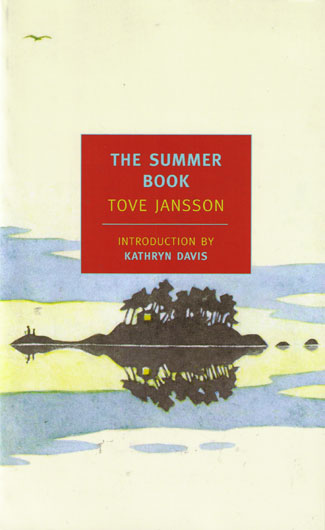
The Summer Book, by Tove Jansson

The twenty-two chapters that make up this brief novel combine surprisingly poignant discussions between two women, one very young and one very old, with closely observed details of the natural world. The girl and her grandmother spend their summers together on a tiny island in the Gulf of Finland, while Papa is also somewhere about, working. Jansson, author of the Moomintroll comic strip and books, apparently based much of it on her own summers on a similar island.

Early on, six-year-old Sophia “woke up and remembered that they had come back to the island and that she had a bed to herself because her mother was dead.” Although this death, almost an aside, is not mentioned again, we are reminded that summer and death go hand in hand: “summer’s lease hath all too short a date.” The transitory nature of life haunts the story and adds depth to the exchanges between Sophia and her grandmother.

The chapters are deceptively plain yet leave the reader aware that each seemingly normal summer adventure—diving into water, entertaining a friend, studying worms—holds a deeper meaning. Jansson’s simple and direct language invites consideration of subtext and metaphor. It leaves a silence similar to the white space around a line of poetry, space where a reader can bring forward her own memories. Surely you, too, have been here: “The forest was full of rustling and whispering. There was a wonderful smell of pine and damp moss. Everything was soft and springy underfoot. You could see a long way between the tree trunks, and here and there sunlight fell on patches of berries.”

I know Sophie and her grandmother as surely as though they are real people in my life. Avoiding sentiment and stereotypes, Jansson gives us a child with strong opinions who feels safe enough to voice them, and a grandmother who is ill and often in pain but who wants to help this child while she can. They speak the truth to each other—how rare is that between the very old and the very young? Such bluntness sometimes means expressing irritation or anger, yet they always speak with love.

They cheat at cards and argue about God. “Sophia asked how God could keep track of all the people who prayed at the same time. ‘He’s very, very smart,’ Grandmother mumbled sleepily under her hat. ‘Answer really,’ Sophia said. ‘How does He have time?’ ‘He has secretaries…’ “

A postcard of Venice leads the grandmother to explain that the city is sinking, and they build their own version of Venice, creating palazzos, bridges and gondolas: “There is something very elegant about throwing the plates out the window after dinner, and about living in a house that is slowly sinking to its doom.”

Most of all, they wander about exploring the island. They walk the shore looking for what the sea has washed up in the night. They are careful not to step on the fragile moss. “Step on it once and it rises the next time it rains. The second time, it doesn’t rise back up. And the third time you step on moss, it dies.” Fragility and protection run through the book. Sophia helps her grandmother when they crawl into the Magic Forest, a dense tangle of dead and living trees, twisted by the wind. Trying to clear a path or separate them “might lead to the ruin of the magic forest,” but left alone, “the trees slipped deeper and deeper into each other’s arms as time went by.’

Although the publisher indicates that the book is about a single summer, there are indications that these are fragments from several summers, floating up as memories do, one calling another, each so unexpected, so vivid, yet mysteriously connected. I came away thinking about the ways we take care of each other and of the natural world. I think about how we connect and what we pass on. This is a book I will come back to again and again.

Summer is a little more than half over for most of us. What has been your favorite summer read?

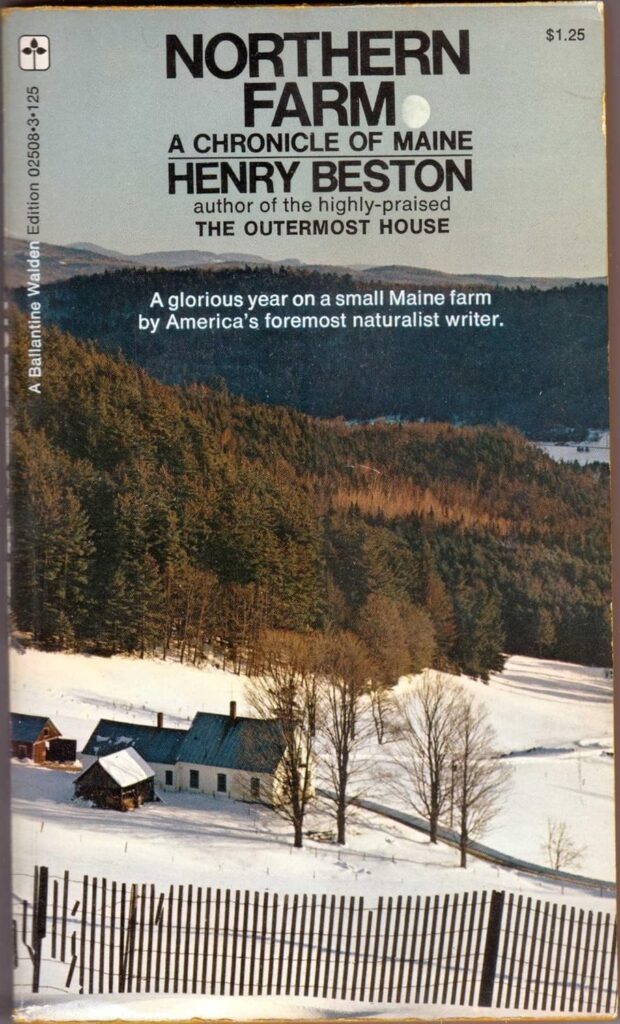
Northern Farm, by Henry Beston

From the writer-naturalist author of The Outermost House, comes an invitation to share in the daily life of a farm in Maine. I found this book so comforting that I stretched it out over a couple of months, only reading one or two short chapters first thing in the day.

Looking for a quieter life than could be found in the Boston suburbs, Henry Beston and his wife, writer Elizabeth Coatsworth, moved to Chimney Farm in Nobleboro, Maine, in the 1930s and lived there for the rest of their lives.

Published in 1948, the book describes a life I thought long gone: heating with wood, using horse-drawn farm  equipment, finding dirt roads impassable in mud season, gathering for community suppers at the grange, and—most heartening—neighbors clad in red-plaid flannel helping each other out with seasonal chores. Yet when I moved to Vermont a few years ago, I found all this and more. Yes, even horses being used instead of tractors on some farms.

Home again from a visit to friends in town, glad to be back where everything doesn’t come into the house along a wire or down a pipe. What a relief it was to get into my farm clothes and have a reasonable amount of physical work to do!

These chapters, which take us through a single year on the farm, originated as a series of country-living columns in The Progressive. Each starts with a few pages full of closely observed description of Beston’s surroundings and often something of his activities that day. Here is an excerpt from a winter walk.

Then, even as I looked, something touched me on the shoulder with a new awareness, and the scene became transformed. The shadows which were but shadows turned to pools of a deep gentian blue, a color tranquil and serene, and the water, which had been but water in snow pool close beside the shadows, became a mirror of some blue and glowing vault of heaven—this other blue being as pure as the first, but perhaps more bright, and with the brightness a measure more delicate. By contrast the sky beyond both the pool and the winter shadows appeared more green. The sun shone, there was no sound, and there I was standing in the road and staring at two of the most beautiful appearances of color in Nature which I think I have ever seen. Only a ridge of purest white snow separated the shadows from the pool.

 It was as if Nature, in the depth of our winter, had called into being the delicate colors of a garden.

That section is followed by excerpts from his Farm Diary, scraps of details that evoke daily life on the land and in the community. Each chapter closes with a paragraph or two of philosophy, sometimes referencing his lifelong theme of cultivating a closer communion with the natural world.

Who would live happily in the country must be wisely prepared to take great pleasure in little things. Country living is a pageant of Nature and the year; it can no more stay fixed than a movement in music, and as the seasons pass, they enrich life far more with little things than with great, with remembered moments rather than hours. A gold and scarlet leaf floating solitary on the clear black water of the morning rain barrel can catch the emotion of a whole season, chimney smoke blowing across the winter moon can be a symbol of all that is mysterious in human life.

I’ve also been reading Braiding Sweetgrass, by Robin Wall Kimmerer, which many of you have probably already read. She draws on her own Potawatomi heritage and her scientific training as a botanist to describe—beautifully—a way of relating to the land and its plants and trees with respect and gratitude.

Both have been a balm during this terrible time, reminding me of the good in people and what is worth defending.

What are you reading to prepare for next month’s Earth Day?

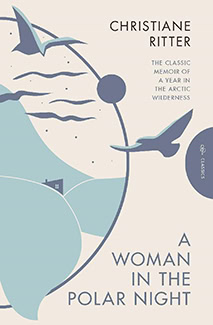
A Woman in the Polar Night, by Christiane Ritter

Translated by Jane Degras

In 1934, the painter Christiane Ritter leaves her comfortable life in Austria to join her husband Hermann in Spitsbergen, an island in the Svalbard archipelago, which lies between mainland Norway and the North Pole. It is one of the most northern inhabited places on the planet. Hermann has been spending increasing amounts of time there, hunting and trapping, and as a result has found a new serenity. Christiane is there to stay with him for a year in a tiny hut, the size of a large closet, where they are joined by a young hunter named Karl.

If 1934 makes your ears perk up, you recall that in August 1934 Hitler merged the chancellery with the presidency into the title of Führer, thus completing his rise to power. Christiane almost never mentions the politics back home where their democracy is being demolished by a dictator, partly because she is too isolated to hear more than a few random scraps of news, and partly because she is absorbed by her new life. Many of us dream of such isolation these days as our own democracy is attacked.

Before leaving, she imagined she would spend her time there reading books, sleeping a lot, and darning socks. But she quickly learns otherwise. There’s a reason the nearby coasts are called Anxiety Hook, Distress Hook, Misery Bay and Bay of Grief.

The closest neighbor is 60 miles away, and even they are inaccessible in the winter’s depths. She and Hermann have brought some provisions, but mostly rely on what they kill. Her description of preparing her first seal dinner is eye-opening. She is sometimes left alone for days and weeks while the men hunt, and she begins to grasp the “terror of nothingness”  that has driven men—and at least one woman, or so the story goes—mad.

Now everything around us is quite dead; even the battering of the storm has ceased. A heavy mist weighs on everything; the hut is shrouded in stillness and darkness. It seems to me as if only now has the real night fallen, and slowly my courage begins to seep away. Perhaps the sun will never come back again. Perhaps it is dark all over the world.

Yet hard as life in the Arctic is, she finds much to appreciate, especially as an artist.  Describing the early morning, she says, “The whole sky is deep lilac, lightening into a tender cobalt blue at the horizon, over the sea of ice. From the east a pale-yellow brightness spreads, and the frozen sea, reflecting the heavenly colours, shines like an immense opal.” 

In one passage I loved, she compares the twilight at the beginning of the Arctic night with ‘the delicate, wonderful paintings of the Chinese painter—monks, in which the immense and mysterious effect is achieved entirely by gradations from light to dark grey, by forms indicated rather than outlined.’

She finds herself changing. “Why have I been so shaken by the peacefulness of nature?” She even comes to appreciate the isolation.

I am conscious of the immense solitude around me. There is nothing that is like me, no creature in whose aspect I might retain a consciousness of my own self; I feel that the limits of my being are being lost in this all-too-powerful nature, and for the first time I have a sense of the divine gift of companionship.

I appreciate all the details of daily life. Her first responsibility is as a housewife, wrestling with the cracked stove that is their only source of heat, sewing curtains from a scrap of fabric once used as a sail. Nothing is wasted. Driftwood logs are propped against the hut to keep it from being blown away. Paths must be shoveled again every day.

There are gaps in the story. We don’t know why Hermann started spending so much time there, when it seems he and Cristiane have a close relationship. They have a teenaged daughter back in Austria, mentioned once, I believe, but we don’t know how Christiane feels about leaving her for a year. I also wondered how Christiane felt when she learned that Karl would be joining them, though she does show us how grateful she is for his help as the year continues.

The book is written as a journal, mostly in the present tense, so we live through her year of changes with her. I love winter, the cold, and the snow, though I think the hut in Spitsbergen would be beyond even me. I loved the book, though, for its appreciation of the natural world and our place in it, and for the brief escape into a simpler, more rigorous life.

What book have you escaped into recently?

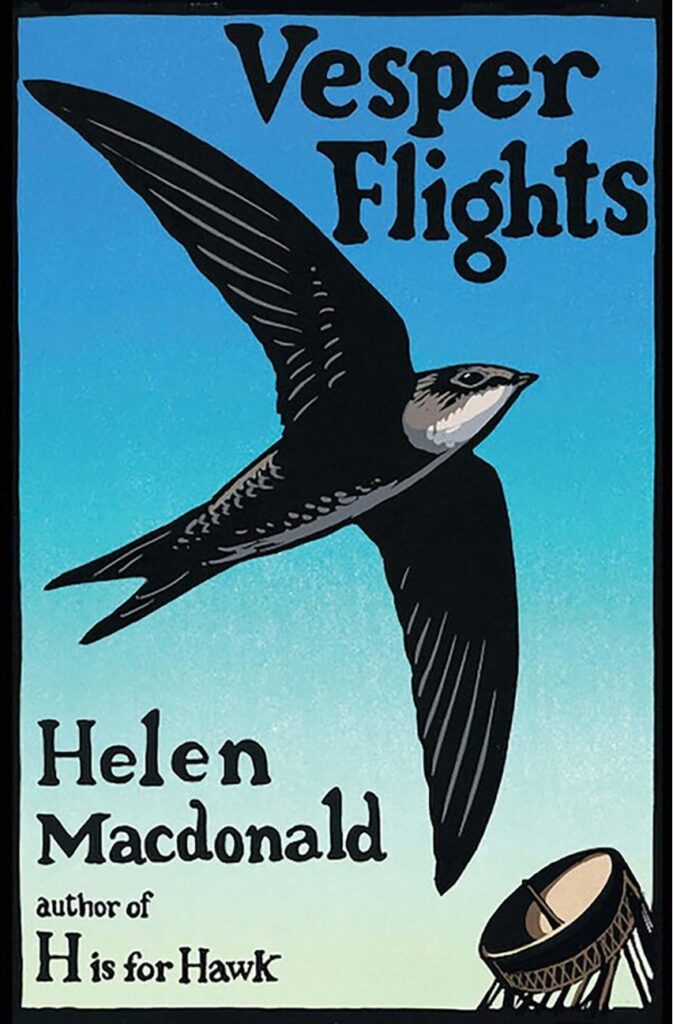
Vesper Flights, by Helen MacDonald

The author of the exquisite and deeply moving memoir H Is for Hawk returns with this collection of essays. She compares them to the objects you might find in an 18th-century cabinet of curiosities, a Wunderkammer, where objects of many sorts from the natural world are displayed so that their strangeness and accidental proximity might inspire wonder and perhaps prompt a larger discussion.

Like the best sort of host, MacDonald opens the doors on these wonders and then lets us make of them what we will. There’s no lecturing. Although she is a presence in the book, it is not about her. Instead, her evocative prose bears witness to these marvels, inviting us to experience them ourselves.

The essays range around the world and into varied environments: from fields and forests to volcanos and the Empire State Building. As MacDonald tells us about wild boars, boxing hares, and several sorts of birds, she encourages us to see the natural world as something other than a reflection of ourselves.  “What science does is what I would like more literature to do too: show us that we are living in an exquisitely complicated world that is not all about us. It does not belong to us alone. It never has.” We are introduced to animals and birds as sentient beings in their own right, with their own needs and wants.

Another theme that runs through these essays is the effect of the loss of habitat on these creatures: those we have lost, such as the wood warblers, and the adaptions some have made, such as the peregrine falcons nesting on the decommissioned power chimneys of the Poolbeg Power Station in Ireland.

For much of the 20th century, falcons were celebrated as romantic icons of threatened wilderness. The mountains and waterfall gorges where they chose to nest were sublime sites, where visitors could contemplate nature and meditate on the brevity of human existence. But there’s a romanticism to industrial sites too. The rusting chimneys and broken windows of the Poolbeg site have their own troubling beauty, that of things that have outlasted their use. Falcons haunt landscapes that speak to us of mortality, mountains by virtue of their eternity, industrial ruins by virtue of their reminding us that this too will in time be gone and that we should protect what is here and now.

Although she deplores the idea that the natural world should be preserved because we humans find it useful in lifting our moods or teaching us about ourselves, insisting instead that it has its own right to exist independently of us, she is not averse to showing how we benefit. She says, “At times of difficulty, watching birds ushers you into a different world, where no words need be spoken. And if you were watching urban falcons, this is not a distant world but one alongside you, a place of transient and graceful refuge.”

Among my favorite parts is the titular essay, which is about chimney swifts and their still mysterious ascent. Twice a day, at dusk and dawn, they fly up out of human sight, where “flying so high they can work out exactly where they are, to know what they should do next. They’re quietly, perfectly orienting themselves.” Another thing I learned is that “Unlike other birds, they never descend to the ground.” Now, when I walk in the evening and see the swifts whirling above, her words speak to me: “Swifts are magical in the manner of all things that exist just a little beyond understanding.”

Another, related theme in these essays is loss: the lost paradises of youth, the chestnut and elm trees that once graced our streets, the extinction or near-extinction of many species. This spring I was thrilled to hear a cuckoo while walking in England, where their population has dramatically declined. She says:

Increasingly, knowing your surroundings, recognising the species of animals and plants around you, means opening yourself to constant grief.

And:

Their loss is not about us, even though when that meadow disappeared, part of me disappeared, too, or rather, passed from existence into a memory that even now batters inside my chest. Look, I can’t say to anyone. Look at the beauty here. Look at everything that is. I can only write about what it was.

Yet there is hope here as well, and treasures to embrace. Even her “Eulogy” for her friend Stu is filled with peace and hope along with the sadness, its ending giving me goosebumps just remembering it.

I keep thinking I’ve finished this book, yet find myself coming back again and again to this essay or that one. I love the way she communicates the “qualitative texture of the world” and opens for me some of its wonders.

What essay or book have you read that reminded you of the wonders of the natural world?

Walden, by Henry David Thoreau

walden

I have read Walden a few times since I first encountered it in high school. Back then I was charmed as so many are by the idea of going to the woods to live, and thrilled by his bits of philosophy. Despite a heavy load of schoolwork, I still spent as much time as I could outside, among the trees, so it’s no surprise that I adopted as my lifelong personal motto “To be awake is to be alive.”

Later readings brought more informed insight. I learned how close his retreat was to town, for example, and paid more attention to his many visitors. I found that he had pulled together parts of his other essays which explained the resulting crazy quilt structure. The first chapter, though, remains a bit of a slog.

On this reading what struck me most was the chapter titled “The Ponds.” It’s mostly about Walden, of course, but he also briefly describes other nearby ponds: Goose Pond, Flint’s Pond (also known as Sandy Pond), White Pond, and Fair Haven.

When I first read the book as a teenager I lived by and loved the Chesapeake Bay, so I was not terribly impressed by his pond. However, all these decades later, it turns out that I have spent a good part of my life in a small cabin by a pond in Massachusetts. Now I can appreciate his beautifully observed descriptions of the water and woods.

“Walden is blue at one time and green at another, even from the same point of view. Lying between the earth and the heavens, it partakes of the color of both.” Being surrounded, like my pond, by pine and oak woods and blueberry bushes makes it seem like “an amphitheater for some kind of sylvan spectacle.” I recognise his descriptions of the “blue flag (Iris versicolor)” growing along the shore and the hummingbirds in June. He speaks of the transparency of the water and of the stones along the shore, recounting stories of how they came to be formed.

As a naturalist, he traces the pond’s rise and fall, its fluctuating temperature, and its various colors. He also worked as a surveyor and his map of Walden could still be used today. He names the kinds of fish and waterfowl, and detects traces of ancient paths “worn by the feet of aboriginal hunters, and still from time to time unwittingly trodden by the present occupants of the land.” He says of being out on his boat “In such transparent and seemingly bottomless water, reflecting the clouds, I seemed to be floating through the air as in a balloon.”

There is something about a pond, a humble one like mine and his, that invites contemplation. Often I set my books and papers aside just to watch the way the light glints on the water or to listen to the rustle of leaves and pine boughs and the sparkling bird calls. Many evenings I have left the lamp off, preferring instead to watch the way the light fades behind the far woods, the water and sky holding the last of the light, the dark band of trees between.

A field of water betrays the spirit that is in the air. It is continually receiving new life and motion from above. It is intermediate in its nature between land and sky. On land only the grass and trees wave, but the water itself is rippled by the wind. I see where the breeze dashes across it by the streaks or flakes of light.

He speaks of fishing during the midnight hours “from a boat by moonlight, serenaded by owls and foxes, and hearing, from time to time, the creaking note of some unknown bird close at hand.” And of “communicating by a long flaxen line with mysterious nocturnal fishes which had their dwelling forty feet below.”

It was very queer, especially in dark nights, when your thoughts had wandered to vast and cosmogonal themes and other spheres, to feel this faint jerk, which came to interrupt your dreams and link you to Nature again. It seemed as if I might next cast my line upward into the air, as well as downward into this element, which was scarcely more dense. Thus I caught two fishes as it were with one hook.

In the second chapter “Where I Lived and What I Lived For” he says

For the first week, whenever I looked out on the pond it impressed me like a tarn high up on the side of a mountain . . . and, as the sun arose, I saw it throwing off its nightly clothing of mist, and here and there, by degrees, its soft ripples or its smooth reflecting surface was revealed, while the mists, like ghosts, were stealthily withdrawing in every direction into the woods, as at the breaking up of some nocturnal conventicle.

I too have watched the way the mist drifts across the surface or sometimes rises in columns. I’ve heard a loon calling in the twilight and watched otters play by the bank.

He tells of an old man who lived by the pond before the revolution who told him that there was an iron chest at the bottom of the pond. Similarly, we have stories of the pond next to mine where somewhere near the center there is a piano resting on the bottom. We have searched for it, but never found it.

Thoreau says, “A lake is the landscape’s most beautiful and expressive feature. It is the earth’s eye; looking into which the beholder measures the depth of his own nature.” Just as I return again and again to my pond with its mysterious depths and sparkling surface, so too I treasure books like this where I can find something new each time I return.

How has your reading of this book changed over the years?

Drive Your Plow Over the Bones of the Dead, by Olga Tokarczuk

drive

An unusual and fascinating novel, Tokarczuk’s book explores the border between poetry and prose, story and fairy tale. The quirky voice of the narrator is firmly established with the first sentence and sustained throughout the book.

Living alone in an isolated community in western Poland, Janina is an older woman who manages her vocation of astrology, the translations of William Blake’s poetry that she and a friend are doing, and the griefs that accumulate over the years. Despite her various physical ailments, she looks after the other homes during the winter, making sure the martens don’t get in and the pipes don’t freeze. Only two other people live there during the winter, Oddball and Big Foot. These are her names for them, as she names almost all the characters.

Then Big Foot turns up dead under mysterious circumstances. He was a loathsome creature in her eyes, a poacher who didn’t care how cruelly he hurt the animals he snared, someone who showed no respect for the non-animal natural world either, cutting down trees for no reason. Yet his death moves her. Oddball insists that the two of them wash and dress the body before the police come. She says:

There we stood in the cold, damp room, in the frosty vacuum prevailing at this dull, gray time of night, and it crossed my mind that the thing that leaves the body sucks a piece of the world after it, and no matter how good or bad it was, how guilty or blameless, it leaves behind a great big void.

Such a powerful way to describe a death. Their call to the police is delayed because not only is the signal spotty, but they often get a signal from the other side of the nearby Czech border instead of their own signal.

Borders are a recurring image, not just between countries, but between a remote community and town, fields and forests, humans and animals, grief and love, one person’s truth and another’s, language and reality. In fields near her house the hunters from town have erected huts they call “pulpits” where they hide in order to shoot the animals that come near, lured by the food the hunters have spread. I’m jarred by the idea of doing murder, preaching murder from a pulpit. Yet it’s so true.

More deaths follow, stranger and stranger. But there are greater mysteries here. What life is worth more than another? What actions are justified by law or ethics, and which one dominates the other? Are we as helpless as we think we are? How do our homes, so meticulously described in this book, reflect us and nurture us and protect us—or not? What is our relationship with the wild, meaning the portion of the natural world that we do not manage?

The title is from Blake, as are epigraphs for each chapter, adding to the fantastical atmosphere. The story sometimes feels like a fable, sometimes a prose poem, sometimes a wrenching view of age and isolation, sometimes a paean to friendship. For Janina does have friends: Oddball, her neighbor; Dizzy, her compatriot in translating Blake; Good News, who runs a second-hand store in town; Boros, an entomologist she meets in the woods.

I found this book so rich, so thought-provoking that I not only listened to the audio book, repeating many chapters two or three times, but also bought the paperback book and am reading it. I loved the narrator’s performance in the audio book, but with the physical book I am seeing different things, appreciating different things—mostly to do with language. Thus, I’m continuing the story’s exploration of borders between one sense and another, between the physical and the metaphysical.

Have you read a novel so fascinating that you immediately reread it?