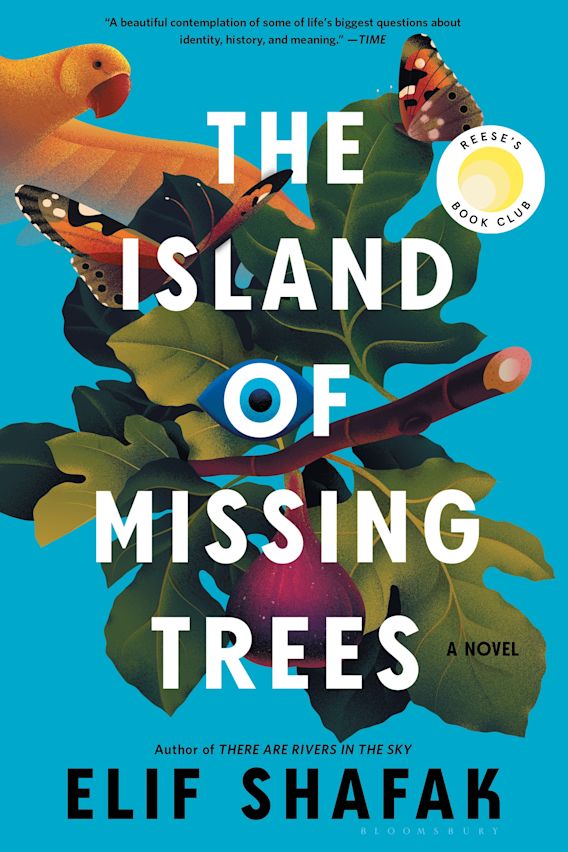
Teenaged Ada, whose name means “island” in Turkish, feels isolated living with her father Kostas in 2010s England. Her parents emigrated from Cyprus before she was born, first Kostas and later Defne, who has died before the story begins. In a powerful scene at the beginning of the book, Ada is called upon in the classroom but, frustrated at being misunderstood by her teacher and classmates, she begins to scream and cannot stop.
If she could only learn about her past, especially her parents’ lives on Cyprus and their reasons for leaving, she might at least be able to feel a connection to the past. A second timeline in the story takes us to that past: the 1970s when Cyprus ison the cusp of the violence that will erupt between the Greek and Turkish populations and cause the partition of the island, with a Turkish state in the north (recognised only by Turkey) and a Greek state in the south. Since Kostas is Greek and Defne Turkish, their romance must be kept secret.
A third and surprisingly substantial storyline is narrated by a fig tree in Kostas’s garden. It’s less of a story, though, than a tranche of information.
Most members of my book club loved the book. Indeed Shafak’s prose is often lovely, and if you don’t know anything about the history and culture of Cyprus, you can immerse yourself in luscious details about food, customs and proverbs—fruit bats, butterflies, all kinds of information—before shuddering at the terrible violence.
Others found it uneven and struggled to stay engaged. The time-shifting got in the way for a couple of us. The story sometimes stayed too long with one timeline, so that we had trouble reconnecting when it finally moved to the other. Some complained that the fig tree’s orations were long-winded and didactic, perhaps partly because much of the information overlapped with The Overstory by Richard Powers.
I found this an ambitious novel and respect Shafak for taking on so many themes and elements. We get Cypriot history, online shaming, prejudice against gay couples, the first- and second-generation immigrant experience, global warming, mental health issues, parenting, bullying, generational trauma and more.
I love the premise of two Cypriot teenagers with a forbidden love who choose to cut their daughter off from the past. However, I struggled with the execution. Overwhelmed by so much content, what suffers are plot and character development. My book club noticed that the scream—so memorable!—is never referred to again after those first few pages and wished the author had done more with it. Other bits are mentioned and then dropped. I had trouble following the plot in both the present and the past timelines. The characters, too, are barely developed. I wanted to know Ada better and Kostas and Defne.
As editor Peter Gelfan recently wrote in Jane Friedman’s blog,
Over the millennia and across just about every culture, a plot-like structure is how stories seem to work. If you have a good reason to depart from it, you better also have something else to take up the slack in reader engagement . . .
A story’s premise is the what-if seed that spawns the whole project . . . Sometimes an author gets so excited by his premise that instead of turning it into a plot, he simply takes the reader on a guided tour as the premise plays out. He might bring in a character, or a series of them, whose dialogue explains what’s going on. Other writers conduct their tours through promiscuously multiple points of view, zipping readers as if on a magic carpet from one site to the next.
I did feel as though I were on a magic carpet being zipped around. Some reviewers call the book enchanting and magical and I can see why. Plus I’m often drawn to books with experimental structures. Maybe if I reread this one with different expectations, I will end up loving it as much as the majority of my book club.
If a novel has gotten tons of praise and positive reviews, does that affect your expectations for the book?