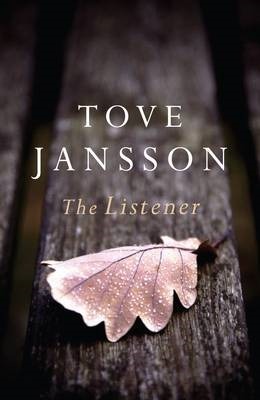
These eighteen short stories, most of them very brief, were first published in 1971 in Swedish; this 2014 translation by Thomas Teal is the first in English. Having loved The Summer Book, I wanted to slip again into Jansson’s spare, evocative prose. Here, too, I relished the way she explores emotional experiences and existential questions through everyday situations.
The stories may seem a bit baffling at first. They read so easily and yet you reach the end and know that you’ve missed something. There are no lessons, no endings tied up in a neat bow. As with all the most rewarding books, the reader must interpret the story for themselves.
In the title story, Aunt Gerda is not only a good listener but also a good letter writer. She replies “with care and serious interest” to all of her friends’ concerns, without putting herself forward or giving advice. Then at the age of fifty-five, she begins to betray the secrets she has been storing all these years. Jansson writes so well about the experience of aging, and also about isolation, which shadows many of the stories.
When people such as Aunt Gerda spend their time alone, it’s not always good for them. And that alienation can become apparent even in company. In “The Birthday Party” the two Häger sisters become flustered trying to throw a birthday party for their niece, and once the children begin arriving Vera and Anya have no idea what to do with them. It is the interaction between the two sisters that is fascinating, not the party itself.
“Black-White” is subtitled “Homage to Edward Gorey.” In it, an unnamed illustrator finds that there is too much light in the home designed by his wife and decamps to an old house owned by his wife’s aunt—Mrs. Jansson—to finish a big project. He approaches the house amid the melting snow. “In the darkening winter evening, this landscape was utterly abandoned, a territory that had no meaning for anyone but him.”
These are quiet stories. My favorite is “Lucio’s Friends.” It begins:
Actually, there’s nothing the matter with him except that he’s so terribly nice. Maybe that’s natural for a big endomorph like Lucio, but it doesn’t seem to me that endless, almost heart-breaking niceness of that kind can be natural for a person who has had so many disappointments. I heard about those indirectly, not from him; he never talks about himself. I really don’t believe I’ve ever heard him make any voluntary statement about anyone he knows or has ever known or been introduced to. It creates an empty space around him.
Of course we all love Lucio. But it’s an affection that borders on despair and can even cross over into irritation.
Well, I’m a sucker for any story about friendship. As Jansson says, “Friendship is such a serious thing that it’s hard to talk about.” I also love stories like these where the seemingly plain prose leaves space for the reader to continue the story and make of it what they will. Let the winter come; let the snow fall. Here is a book to read and reread.
What book have you read that made you want to turn back to page one and read the whole thing again?