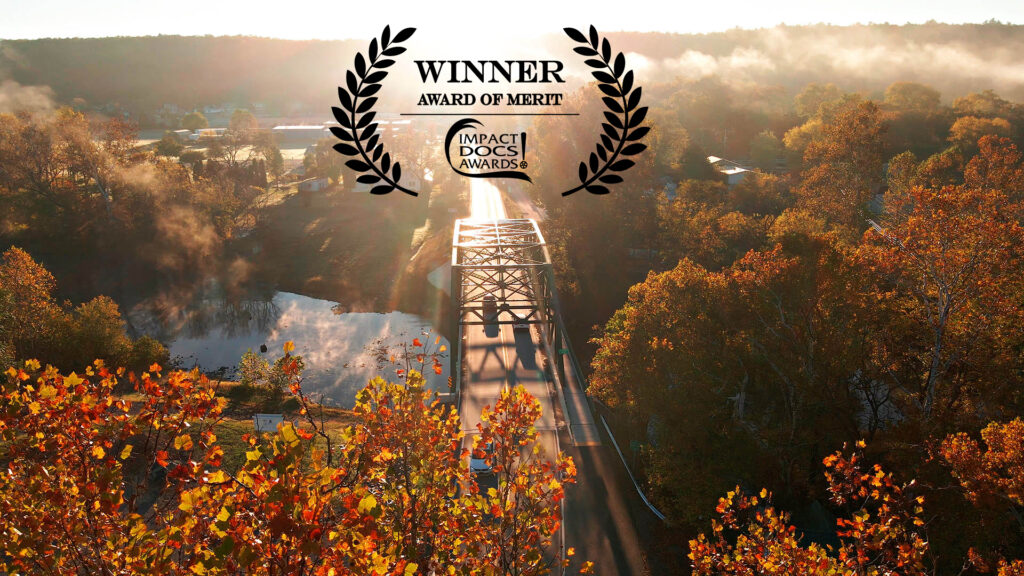
With so much working to divide us, this film by Richard Anderson provides a much-needed balm. In it residents of the small West Virginia town of Capon Bridge tell us in their own words why their sense of community outweighs their differences.
Across all four seasons, Anderson interviews people ranging from farmers to local business owners to craftspeople, including both newer and long-time residents, seeking their opinions and insights into why their community is so close. One reason is the number of town-wide events, like community meals and holiday celebrations, where people work and talk together in person. While it’s easy to demonise or dehumanise a class of people, once you get to know them as individuals, it’s a different matter.
“Let’s stop learning about each other through the media, talk face-to-face and get a better idea of who each other is.” Rev. W. Scott Ingleton, North River Mills United Methodist Church
I’m reminded of the street I live on where we are all of different ages, educational background, economic status, etc. We probably hold different political views as well, but we don’t talk about that so much as share town-related information. We talk about children and cats and gardens and trees. We come together when an elderly neighbor needs help shoveling their walk or there’s some other problem.
“You can stand and say a lot of things hollering at your neighbor across the fence but when it’s their barn’s on fire you’re going to cross the fence. It think it’s the same thing on a national level . . . Don’t build a taller fence; build a longer table.” Becky Morgan, Quicken Farm
If we can indeed take that kind of care for each other, could we begin to bring even those spewing hate into the fold? Perhaps Capon Bridge’s success can only work in a small town. If nothing else, it can be a model for us as we move forward. This film reminds me that at heart I’m still the person I was in the 1960s: advocating peace and love, calling for us to come together for the common good.
The residents of Capon Bridge don’t shy away from the problems that come with change and progress, but talk about compromise and remembering that these are the people you run into every day in town. They discuss the need to support the decision-making process in their town government, whether or not you agree completely with the result.
“A lot of change can come about in small communities. It starts there actually because community is made up of people that have to get along in order to make sure that the water runs and that the roads are drivable and the sidewalks are walkable . . . Everyone contributes something.” Julie Farrar, Wild Earth Studio
What a gift this film is! I love the mix of interviews and shots of the town and surrounding areas. I love the community festivals. I love the music that is selected and performed by Dakota Karper, who is also interviewed in the film as the owner of The Cat and Fiddle music school in Capon Bridge. The bridge metaphor is so powerful.
Historical photos of the town add to the texture of life there. The progression of the interviews—the order in which they are presented—is smooth and effective; they build on each other so well. This film truly reveals how small communities can show us the way forward.
You can see Stories from Capon Bridge: Portrait of a Small Community here.
What brings you hope in these dark times?
Photo by Richard Anderson
Disclosure of Material Connection: I received access to this film free from the producer. I was not required to write a positive review. The opinions I have expressed are my own.