The Incredible Crime, by Lois Austen-Leigh

This has been my month for virtual travel: from a remote Finnish island to southern Virginia to Tuscany and London. Now this recently republished novel from 1931 takes me to East Anglia, a part of England I love, where we move between Cambridge and a manor in Suffolk.

Prudence Pinsent, a thoroughly modern woman in her thirties, lives with her father, the Master of (fictional) Prince’s College and a retired bishop. In her role as his hostess she’s perfectly proper but “she reserved to herself the right to swear like a trooper when she chose.” She attributes her independent spirit and unconventional behavior to “a far-back buccaneering ancestor.”

We meet her at a bridge party throwing a crime novel across the room in disgust. The conversation with her three friends, Cambridge wives, quickly turns from a discussion of novels and Cambridge gossip to a new and untraceable poison acquired by one of the odder professors. Then the professor husband of one of the wives enters: “About  the last thing in the world that Skipwith looked like was what he was, an eminent scientific professor. He was not only washed, he was even shaved.”

 A few days later she heads out to visit her beloved cousin at his home Wellende Old Hall, a (fictional) isolated manor among the marshes and canals of Suffolk, that has its own ghost. The description of the autumn drive, passing Ely Cathedral, the Devil’s Dyke, and Bury St. Edmunds, invites the reader in.

Already the academic feeling of the University was beginning to fade, and the feeling of the country-side, of long furrows made by the plough, of thickets scratching in a stubble field, of tired cart-horses going home o’ nights, was beginning to supersede it—the beech woods were all turned to a russet brown, mingling with the soft tints of the ploughed fields and the hedgerows.

As she approaches Wellende, the startling white of gulls against the soft brown fields and then the cold, grey North Sea call up the atmosphere of the fens with their secret streams and ghosts and history of smuggling.

The plot spins out around smuggling, spies, and drugs seasoned with academic satire, country house mayhem, and modern romance. Also, hunting, so be warned.

In Kristen R. Saxton’s introduction, she points out that, “Just as The Incredible Crime combines conventions from the traditions of village and college mysteries, it also offers a sparkly union of the Jane Austen novel of manners with the mystery genre.”

Lois Austen-Leigh is said to have written her novels at the very desk used by her great-great aunt, Jane Austen, later donated to the British Library by Lois’s niece. Lois wrote four crime novels during the Golden Age of British mystery, the period between WW1 and WW11. Her uncle, Augustus Austen-Leigh, was Provost of King’s College, Cambridge, hence her understanding of University doings. She did war-work in both wars and was friends with people like Benjamin Britten and M.R. James. All this makes me curious about her life, and I’m looking now for a biography of her.

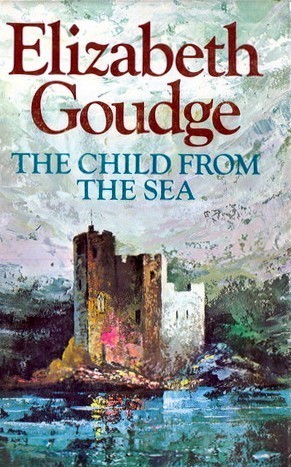
The intriguing cover design is based on a British Rail poster from the 1920s, reproduced on the back cover. I learned about this novel and many more set in Cambridge from a post by Anne Kennedy Smith on Substack.

Although the plot is a bit thin in this period piece, the atmosphere and setting are delightful. I found the story great fun and a welcome step back into a different time and place.

What is your favorite Golden Age mystery?

Still Life, by Sarah Winman

Tuscany, August, 1944. Taking a walk after lunch, Evelyn Skinner sees a jeep and waves it down. As an art historian with decades of experience, she’s in Italy to help with the artworks from museums and churches that have been hidden in the hills during the war, identifying them and assessing the damage. She asks the young English soldier driving the jeep, Private Ulysses Temper, to help her contact the Allied Military Government.

Even in this brief scene, these two people capture the imagination, while Tuscany itself seizes the senses. Ulysses is on his way to pick up Captain Darnley, who has opened his eyes to glories of Italy and art and literature, and takes Evelyn along. Then we jump to London where we meet Ulysses’s wife Peg, Col who runs the bar where she sings, Cress who converses with a tree, the parrot Claude who lives in the bar and quotes Shakespeare, and others. From that point on the novel alternates between London and Florence.

I picked up this book wanting to spend some time in Italy in the middle of the twentieth century. The description are luscious, but the true beauty of the book comes from showing how the fragile threads we throw out to each can, over time, become a beloved community and a motley group of eccentrics can become a family.

There’s never any confusion with the wide cast of characters spread between the two cities. Each person vibrates with life, their adventures by turns dangerous, hilarious and poignant. We meet them as they gather in the sort of places we’ve started to call the commons: a pub, a café, a plaza. We follow them over the decades as they, and we, begin to see how these relationships that began so casually have become a web that can support them during the worst times.

Some people in my book club were bothered by the many unlikely coincidences, but most of us enjoyed the fairy tale quality of the story. We also appreciated the subtle use of symbols and the way different kinds of arts were folded into the story: music, paintings, sculpture, poetry, literature. The descriptions of places and people seduced me, and the dialogue is some of the best I’ve read.

However, the decision to present dialogue without quotation marks poses a problem. It’s a cool, modern thing to do, but this fiction is set in the past. Worse, I often couldn’t tell what was dialogue and what was narrative. Some stories manage to make this clear without the punctuation, but not this one. Most of the people in my book club had trouble getting into the book; they started and stopped, tempted to give up, or they had to reread parts near the beginning a few times before taking the plunge. They thought the lack of quotation marks played a part in their confusion.

Writers often struggle with beginnings and endings. In some of my reviews, you’ll find a complaint about an ending that seems too abrupt or that ties things up too neatly. Here, I found the opposite problem: the last section should have been cut. Unfortunately it leaves behind the rich cast of characters we’ve come to love in order to follow a single one, and introduces a slew of new characters here at the end of the book. The section is well-written, but unnecessary to the story. It felt like padding. I was disappointed, too, that it took some wonderfully evocative allusions from earlier in the book and ran them into the ground, just in case we didn’t get them. 

Yet even with these concerns, I don’t know when I’ve enjoyed a novel as much as this one.  Each time I picked it up, I felt as though I were sinking into a rich, delicious dream. What a wonderful, luxurious summer read!

What novel set in Tuscany have you enjoyed?

Gemma Sommerset, by Jill McCroskey Coupe

The story opens at a summer camp in the Blue Ridge mountains where fourteen-year-old  Gemma undergoes a transformative experience. In 1957 girls’ roles were strictly defined, especially in the South, but away from home and facing a surprising danger, she finds a new sense of herself. The problem then becomes what to do with that when she returns home.

Gemma is part of an in-between age group: too late to be part of the WWII generation and too soon for the Sixties with its peace-and-love. This new novel from Jill Coupe explores how throughout her life she balances her desire for adventure and accomplishment with society’s restraints and expectations.

She dreams of studying French in Paris but ends up in a traditional marriage, home with a baby while her husband continues up his professional path. I’m reminded of Philip Larkin’s poem “Afternoons” where he describes young mothers watching their children at a playground, ending with: “Something is pushing them / To the side of their own lives.” Gemma’s one joy is watching the sun rise each morning, its beauty a reward, its freshness a promise.

The wonderful editor Dave King once wrote about what he called the gentle genre: “straightforward tales of ordinary people in mostly every-day, low-key situations.  No psychotics, no wrenching twists, no gore, no vampires or werewolves or demons.” These stories were popular in the early part of the 20th century, from writers such as Jan Karon, Angela Thirkell, D. E. Stevenson, Elizabeth Cadell, R. F. Delderfield, and Wendell Berry.

The problem with writing such a story is how to create enough tension and suspense to propel the reader through to the end when you can’t throw in a gang war or vampire to liven things up. Dave King defines two ways to keep a gentle story going without letting it become either boring or saccharine. One is for the author to pay close and detailed attention to the characters so the reader will recognise that even small things hold deep meaning for them. The other is to set the story in a small town where you can’t avoid interactions with your neighbors, even if their opinions differ from yours.

In terms of the first method, we do get to know Gemma and the experiences that shape her and her refusal to be pushed to the side of her life. Since the story is told from her point of view, we learn about the other characters as she does. As for the second, her life revolves around her family so they, rather than the small city where she lives, become the community she defines herself within. Conflicts with her parents, husband, and daughters animate Gemma’s story as she strives to carve out a space where she can be herself while still caring for them. As Dave King says, gentle books—of which this is one—are “driven by love.”

Stories driven by love are a much-needed balm these days. Gemma Sommerset reminds me about the importance of family and community. We might disagree, but we can do so with love. So maybe Gemma’s not so far away from the Sixties generation as I thought.

What novel have you read lately that reminded you of what really matters?

The Summer Book, by Tove Jansson

The twenty-two chapters that make up this brief novel combine surprisingly poignant discussions between two women, one very young and one very old, with closely observed details of the natural world. The girl and her grandmother spend their summers together on a tiny island in the Gulf of Finland, while Papa is also somewhere about, working. Jansson, author of the Moomintroll comic strip and books, apparently based much of it on her own summers on a similar island.

Early on, six-year-old Sophia “woke up and remembered that they had come back to the island and that she had a bed to herself because her mother was dead.” Although this death, almost an aside, is not mentioned again, we are reminded that summer and death go hand in hand: “summer’s lease hath all too short a date.” The transitory nature of life haunts the story and adds depth to the exchanges between Sophia and her grandmother.

The chapters are deceptively plain yet leave the reader aware that each seemingly normal summer adventure—diving into water, entertaining a friend, studying worms—holds a deeper meaning. Jansson’s simple and direct language invites consideration of subtext and metaphor. It leaves a silence similar to the white space around a line of poetry, space where a reader can bring forward her own memories. Surely you, too, have been here: “The forest was full of rustling and whispering. There was a wonderful smell of pine and damp moss. Everything was soft and springy underfoot. You could see a long way between the tree trunks, and here and there sunlight fell on patches of berries.”

I know Sophie and her grandmother as surely as though they are real people in my life. Avoiding sentiment and stereotypes, Jansson gives us a child with strong opinions who feels safe enough to voice them, and a grandmother who is ill and often in pain but who wants to help this child while she can. They speak the truth to each other—how rare is that between the very old and the very young? Such bluntness sometimes means expressing irritation or anger, yet they always speak with love.

They cheat at cards and argue about God. “Sophia asked how God could keep track of all the people who prayed at the same time. ‘He’s very, very smart,’ Grandmother mumbled sleepily under her hat. ‘Answer really,’ Sophia said. ‘How does He have time?’ ‘He has secretaries…’ “

A postcard of Venice leads the grandmother to explain that the city is sinking, and they build their own version of Venice, creating palazzos, bridges and gondolas: “There is something very elegant about throwing the plates out the window after dinner, and about living in a house that is slowly sinking to its doom.”

Most of all, they wander about exploring the island. They walk the shore looking for what the sea has washed up in the night. They are careful not to step on the fragile moss. “Step on it once and it rises the next time it rains. The second time, it doesn’t rise back up. And the third time you step on moss, it dies.” Fragility and protection run through the book. Sophia helps her grandmother when they crawl into the Magic Forest, a dense tangle of dead and living trees, twisted by the wind. Trying to clear a path or separate them “might lead to the ruin of the magic forest,” but left alone, “the trees slipped deeper and deeper into each other’s arms as time went by.’

Although the publisher indicates that the book is about a single summer, there are indications that these are fragments from several summers, floating up as memories do, one calling another, each so unexpected, so vivid, yet mysteriously connected. I came away thinking about the ways we take care of each other and of the natural world. I think about how we connect and what we pass on. This is a book I will come back to again and again.

Summer is a little more than half over for most of us. What has been your favorite summer read?

Beryl Blue, Time Cop, by Janet Raye Stevens

Librarians! I admire them all. They know so much and are incredibly generous. So when I met a librarian who’d written a suspense story about a time-traveling librarian, how could I resist?

Beryl Blue, librarian-in-training, is going about her business one day in 2015—her business at that moment being shelving books—when she falls off a ladder and into an adventure. Caught by the mysterious Glo Reid who materializes from 2031, Beryl is given a mission to go back to 1943, where World War II is in full swing, and prevent a man from being killed. She—this perfectly ordinary young woman—is the only one who can eliminate the assassin.

It sounds far-fetched, but we quickly learn enough about her past—and her tendency to run away from trouble—to go along with it. To her consternation, the place where she has landed is her very own town, at least a past version of it.

Beryl’s story makes for an entertaining summer read. I especially liked the details from 1943: the slang, the music, the clothes. From the rooming house to the nightclubs, Beryl sticks with Sergeant Tom Sullivan and his mates while they celebrate their embarkation leave. He thinks he’s protecting her, while she knows it’s the other way around.

While keeping an eye out for the assassin even though she knows she’d never be able to actually kill him, Beryl struggles to answer Sully’s questions about where she’s from and why she—a single woman—is on her own. Her 21st century views on things like smoking and women’s roles are challenged by the mores of the period. Meanwhile, she is wondering why this one man’s life is essential to saving the future as she knows it.

Plot twists abound, challenging Beryl’s understanding of herself and leading to a satisfying conclusion. There are three more books in the series: something to look forward to.

What books do you turn to for light-hearted entertainment?

Clear, by Carys Davies

In 1840s Scotland, John Ferguson makes the difficult decision to become one of the evangelical ministers leaving the Church of Scotland to help form the Free Church of Scotland. It means giving up his job and income, but at least his church will be free of patronage and interference from the British Government. Also, it’s not the life he’d promised his wife Mary, but she accepts his choice.

The other major political upheaval besides the Disruption of the Church of Scotland is the ongoing Highland Clearances in Scotland which saw wealthy rural landowners evicting tenant farmers to clear the land for cattle or sheep. Most of the people in my book club were not familiar with the Clearances, which caused immense poverty and fury among the rural poor. A couple of us knew about them through our reading or family stories, but none of us had heard of the Disruption.

Desperate for funds, John jumps at the offer of a temporary, well-paying job as a factor. His assignment is to travel to a remote Scottish island and evict the lone remaining inhabitant—Ivar—so the island may be turned over to sheep. However, soon after arriving on the island he’s badly injured in a fall from a cliff.

Ivar finds the unconscious man and takes him into his home to nurse him. For a long period, John does not remember why he is there and busies himself learning Norn, the ancient language used by Ivar, so the two can communicate.

This lovely story is told in through three perspectives: Ivar, John and Mary. The author’s descriptions of the lonely island and Ivar’s life there are stunning both for their beauty and their authenticity. I especially enjoyed the language lessons, using actual Norn words that are poetic in their precision, such as the word “for the moment before something happens; for the state of being on the brink of something.”

It’s also a story of connection, of how a life of isolation and solitude can be transformed by the arrival of another human being. The author’s spare, elegant prose turns the book into, as one member of my book club said, a real gem.

Curiously, everyone in the book club understood the ending differently. No spoilers here, though many reviewers have criticised the ending as abrupt and unearned. For us, even though we read it aloud several times, we still understood it to mean different things.

That’s okay with me. I don’t mind endings where the story seems to go on after you close the book. In fact, the different endings we came up with said more about each of us that they did about the book. One person suggested we write to the author and ask her to write a sequel, though that mostly reflected our desire to spend more time with the characters.

I do mind when the ending is unearned. I believe the story could have prepared the ground for it a little better, but I actually liked it as it is.

If you enjoyed Small Things Like These, you might enjoy this story. I certainly did, and that was one thing that my book club did agree on: we all were immensely glad to have read it.

What books set on a Scottish island have you enjoyed?

The Strand Magazine, Issue LXXV 2025

A new story by Graham Greene? And a new one from Ian Fleming, too? Wow! I had to send for this issue.

Greene’s story is a departure from his usual explorations of moral ambiguity in the worlds of diplomats and spies, which he knew from having been recruited by MI6, as well as the Catholic faith and imperialism. “Reading at Night” is an entertainment indeed: a ghost” story, reminiscent of classic British ghost stories such as those described in Ghostland, by Edward Parnell.

A man who is traveling on the Côte d’Azur stays in a borrowed house has a nervous disposition, traumatised by a boyhood reading of Dracula. He picks up an anthology of stories to read himself to sleep, but unfortunately the one he lights on . . . Well, Greene shares the story with us and it’s disturbing and mysterious. When our man becomes too terrified to read any more, he puts the book aside and turns out the light. Then . . .

I found myself going back to look for what Donald Maass calls promise words: words that tell you what to expect in the story. I found plenty that helped create the ominous atmosphere, the sense of being outside of the natural world, and the suspense.

Ian Fleming’s “The Shameful Dream” is not about James Bond, but rather a story of psychological suspense as a successful literary editor, Caffrey Bone, drives toward the home of the Chief. Lord Ower has invited Bone for the evening at The Towers and to spend the night. Gradually, though, we learn the reasons why he wishes the invitation had been sent to someone—anyone—other than himself. Plenty of promise words in this sentence alone:

Bone stared moodily ahead at the rain and the dripping hedgerows and at the shaft of the headlights probing the wet tarmac of the secondary road which would bring him in due course to The Towers.

I had heard of The Strand Magazine in its British incarnation. From 1891-1950 it published short fiction and general interest articles and was perhaps best known for being the first in the U.K. to publish Arthur Conan Doyle’s Sherlock Holmes stories and some of Agatha Christie’s. I somehow missed that it was revived in 1998 in the U.S. The magazine features stories from emerging crime and mystery writers in addition to stories by established writers. These are genres that I often turn to, and I thoroughly enjoyed this entire issue.

Aside from the stories by Greene and Fleming, there are two by writers I’m familiar with—Denise Mina and C.J. Box—and two by authors new to me—Mike Adamson and John M. Floyd. All are excellent. What a box of wonders! To top it off there’s a fascinating talk with Amor Towles, author of A Gentleman in Moscow and The Lincoln Highway, and pages of reviews of additional mysteries and thrillers.

Sometimes it seems as though there are too many magazines and too little time, but The Strand is one I now intend to make time for.

Have you read a magazine full of short stories lately? Tell me about it.

Three Days in June, by Anne Tyler

I’ve been a fan of Anne Tyler’s novels from the get-go. She writes about my kind of people and the place I lived in for most of my life. I slip into her stories as though they’d been tailored just for me—and never more so than with this latest book.

Assistant head in one of those posh private schools Baltimore is known for, Gail is shocked one Friday morning when her boss discloses that she’s decided to retire, and the new head is bringing her own assistant with her. Gail’s response is to simply walk out of the school, leaving everything behind her.

She thinks that maybe she could go back to teaching math somewhere, but first she must deal with her daughter’s wedding on Saturday. The future mother-in-law has taken over arranging everything, and Gail feels obliged to leave her to it since the in-laws are paying for everything.

Her boss says Gail lacks people skills, but she does have a sharp eye and a tart tongue. I found myself snorting with laughter over her asides, laughing more at myself than at her. “I wondered why it was that I had so many irritating people in my life.” She reminds me of my grandmother when she was feeling cranky. She reminds me of myself.

It is Gail’s voice as narrator that truly carries the story and makes it impossible to put down. She may hide her emotions from others but she’s scrupulously open when it comes to her own thoughts. She says, “Sometimes when I find out what’s on other people’s minds I honestly wonder if we all live on totally separate planets.”

Just as she is settling into her day at home, the doorbell rings and it is her ex-husband Max, who’s brought along a cat he is fostering and thus cannot stay with his daughter; her fiancé is allergic. Thus begins three days of the two of them bumping up against each other, falling into familiar patterns and even developing new in-jokes.

The marriage of your only child rouses echoes of the past, in Gail’s case exacerbated by one of her former boyfriends turning up at the wedding. We gradually come to understand how Gail and her family got to where they are now and what choices they are going to have to make.

One of the things I’ve always loved about Anne Tyler’s books is her compassion for her characters, all of them. I truly felt that I knew Gail and commiserated with her as she tries to find her footing in a changing world. I’m charmed by this portrait of a marriage, odd and bumpy and interrupted as has been through the years.

Do you have a favorite Anne Tyler book?

THICK and Other Essays, by Tressie McMillan Cottom

Reading this collection of essays has been like sitting down with a friend and asking, So tell me—what do you really think? Cottom draws on her academic training and her lived experience to create pieces that blur the line between sociology and personal essay. One editor said she was “too readable to be academic, too deep to be popular, too country black to be literary, and too naïve to show the rigor of my thinking in the complexity of my prose.”


If in her academic life she is chided for her popular success on social media and for using herself as a subject, she responds that “The personal essay had become the way that black women writers claim legitimacy in a public discourse that defines itself, in part, by how well it excludes black women.” Writing about your personal experience is a way in because your authority about your own self cannot be denied. Also, by its very form the personal essay invites empathy from readers.


I was, like many young women, expected to be small so that boys could expand and white girls could shine. When I would not or could not shrink, people made sure that I knew I had erred….[I was] thick where I should have been thin, more when I should have been less.

She writes about black women’s (and girl’s) problems, ones that are too often dismissed by others, in lucid prose that invites you into the conversation. But don’t be fooled by the casual tone. Yes she can be snarky and funny, but she can also pull out the statistics to support her statements and references to the work of other academics and deep thinkers. I often found myself setting the book aside between essays to follow the links in the endnotes for more detail.


I especially appreciate that she keeps probing at an issue. For example, in “Dying to Be Competent” she starts from our common desire to be able to manage our own lives, despite the fact that much of what happens to us is unpredictable and outside of our control. She goes on to tell a heart-wrenching story of trying to navigate the healthcare system, and the shock that despite her academic credentials and middle-class status markers, she has to fight for treatment and medication because the staff assume that she is incompetent and ignorant and thus can be ignored.


All this is presented in a cool tone and then buttressed by study after study about the high mortality rate of black women giving birth in the U.S., as well as by the example of what even celebrity tennis superstar Serena Williams had to go through to get a needed treatment, one that likely saved her life.


But Cottom doesn’t stop there. “Sociologists try to figure out how ideologies like race and gender and class are so sticky . . . The easiest answer is that racism  and sexism and class warfare are resilient and necessary for global capitalism.” A further analysis takes us to Patricia Hill Collins’s idea of “controlling images, those stereotypes that are so powerful they flatten all empirical status differences among a group of people to reduce them to the most docile, incompetent subjects in a social structure.” Such reduction is needed because “This moment of global inequality demands incompetent subjects.”


This is just one example from one essay. If I’ve made it sound like heavy going, believe me when I say that it is not. I read most of the essays twice, just for the sheer delight of following her argument. This is a book that has given me much to think about.


What book or podcast or blog has given you new insight into our culture?


Loitering with Intent, by Muriel Spark

We meet Fleur Talbot sitting in a graveyard in Kensington writing a poem, when a young policeman approaches her. It’s 1949. Young Fleur, eager to collect experiences that she can use in her writing, rejoices in “how wonderful it feels to be an artist and a woman in the twentieth century.” She makes friends everywhere “almost by predestination.” When the friendship pales, she says, “You didn’t think of discarding them just because you didn’t altogether like them.”

Her friend Dottie—one of many hilarious and perfect names in this book—is ”a Catholic, greatly addicted to the cult of the Virgin Mary about whose favors she fooled herself quite a bit.” She seems unconcerned that Fleur is having an affair with her lackluster husband Leslie. Fleur says she loves him “off and on, when he doesn’t interfere with my poetry and so forth. In fact I’ve started a novel which requires a lot of poetic concentration, . . . So perhaps it will be more off than on with Leslie.”

Light-hearted Fleur gaily sidesteps small matters like having money for rent and other necessities while she finishes her first novel, Warrender Chase. When a friend finds her a job at the Autobiographical Association, helping its posh members write their memoirs, she is eager to observe them. The Association is the brainchild of  Baronet Sir Quentin Oliver. He set it up so that the memoirs will not to be published for 70 years to avoid offending anyone named in them.

There we meet a truly quirky crew. The one who most delights me is Sir Quentin’s elderly and outrageous mother Edwina. She comes out with the most inconvenient truths and loses control of her bladder at will, much to Sir Quentin’s embarrassment. The two tangle constantly, and it is ruthless Edwina who usually comes out the winner.

Almost immediately Fleur becomes suspicious of Sir Quentin’s intent, eventually calling him a “psychological Jack the Ripper.” However, she believes in writing about terrible sins ”with a light and heartless hand. It seems to me a sort of hypocrisy for a writer to pretend to be undergoing tragic experiences when obviously one is sitting in relative comfort with a pen and paper.”

She’s surprised to find that Sir Quentin seems to become more and more like her protagonist Warrrender Chase. Then the lives in the memoirs she’s typing up begin to mirror other characters in her novel, leading Sir Quentin to threaten to sue her publisher to stop publication of her novel. She claims that her novel came first, but this slippery novel keeps you wondering who is making up what, and how on earth it will all work out.

It may be offbeat and joyful, but the novel offers plenty of plot twists—a stolen manuscript, suspicious deaths—and for those who care to look deeper, some interesting things to say about a writer’s purpose and methods, not to mention their sources of inspiration. Underlying the witty story is a Modernist conundrum about whether people give rise to literary characters or vice versa. How do we construct the selves we present to the world or to ourselves?  

Or you can ignore all that and just enjoy the sparkling dialogue. The unexpected lurks around every corner, and you never know when Edwina will let loose a “fluxive precipitation.”

What Muriel Spark novels have you read?