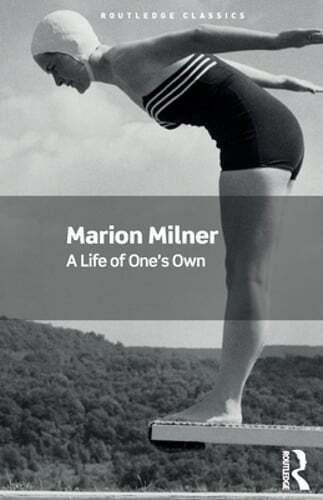
“Perhaps if one really knew when one was happy one would know the things that were necessary in one’s life.” Marion Milner
In 1926 Marion Blackett (later Milner) set out to discover “what kinds of experience made me happy.” Although armed with a First Class Honours Degree in Psychology and working in that field lecturing and researching, the twenty-six-year-old became aware that she was dissatisfied with the life she was living.
Among the possible cures she considered were adopting the habits of her peers or the standards of her parents’ generation. She also discarded the idea of following her own reason or developing a logical argument. She says, “So I began to have an idea of my life, not as the slow shaping of achievement to fit my preconceived purposes, but as the gradual discovery and growth of a purpose which I did not know.”
To learn what made her happy, Marion decided to examine her own perception, that is, her senses. Instead of making “the centre of awareness in my head,” she chose “knowing with the whole of my body.” In doing so, she takes Virginia Woolf’s A Room of One’s Own and expands upon it by offering a potential process for creating space in that room.
The process she chose started with keeping a diary of times she felt happy. Later she added freewriting to examine her entries further. Finally, she began writing this book, partly so she would have a record of this exploration and partly in the hope that others might find the process useful. Many of the epigraphs for the chapters come from Robinson Crusoe, echoing her deliberate isolation in this endeavour.
I wish I’d first read this book when I was young. Now that I’m well gone in years, I find myself greeting many of her discoveries and insights like old friends. For example, she found that once she started noting down when she was happy, she noticed more and more things that brought her joy, anticipating our current interest in paying attention, mindfulness and gratitude. Also, she found that being out in nature brought her joy, as did clearing out the spaces in her home.
Still, I enjoyed following the peculiar track of her mind, as she resists her temptation to control her thoughts instead of leaving them to themselves. Her prose, too, is clear and jargon-free. As someone who has kept a journal for most of my life, I also liked reading her excerpts and her thoughts about the value of her diary entries.
I also found the thoughts and preoccupations of a woman of that time interesting. The seven years she spent on this work held tumult and uncertainty, both personally and politically. During that time, the western world was roiled by the Great Depression and the run-up to World War II. She herself married Dennis Milner, had a child, and moved from Britain to the U.S.
What made me actually pick up the book, though, is that I love reading about people who shrug off society’s roles and rules in order to create their own lives from scratch. Many of us who came of age in the late 1960s and 1970s chose to reject the straitjacket of that era’s roles in order to find our own path, often without any models to guide us. In midlife I found I needed to remake my life, and again after I retired. Perhaps this effort, though most intense when we’re young adults, is one we come back to again and again.
Are you happy with your life? What might you change about it?