In the Fall, by Jeffrey Lent

In Virginia during the last days of the Civil War, a wounded Union soldier becomes separated from his comrades and is found near death by an escaped slave who saves him. Norman Pelham and Leah Mebane become inseparable and, after he is demobilised and they marry, the two decide to walk to his home in Randolph, Vermont. As they pass through nearby Bethel, his fellow veterans—already home for several months—watch for him.

So they saw him pass along the road that Indian-summer morning with the sugarbush maples flaring on the hillsides and the hilltop sheep pastures overgrown with young cherry and maple. Word ran along the road ahead of him so near all his neighbors and townspeople saw him walking in the long easy stride of one who counted walking in months and years not miles, a rucksack cut from an issue blanket strapped to his back and by his side a girl near his own height in a sunfaded blue dress and carrying her own cardboard suitcase bound with rough twine.

Norman’s father has died while he was fighting, leaving the farm to him. His mother and two sisters, while abolitionists, are so shocked and troubled by Leah that they move into town, leaving the young couple to begin their new lives on the farm. Fired by their fierce love for each other, they ignore the scorn of their neighbors by keeping to themselves and plunging into the hard work of making a living from a hill farm.

Thus begins this saga of three generations of Pelhams, haunted by their troubled legacy of what Leah left behind and by America’s ongoing racial tensions.

This debut novel was a huge bestseller when it was released in 2000. I told the friend who recommended it to me that I didn’t know whether to bless her or curse her because I found it thoroughly addictive reading—the prose so luscious that I read slowly to savor it and could hardly bear to set it aside until I’d finished all 565 pages.

Lent takes his time with the story, enclosing me in the worlds of nineteenth-century farm life and early twentieth-century bootlegging, in New England’s mountains and North Carolina’s tobacco and cotton fields. I especially enjoyed the very specific details about tools and descriptions of places and processes in these time periods; they added so much richness to the fabric of the story. I could tell how fully the author inhabited each moment of the story as he wrote.

The partridge went up, a sudden burst of speckled animation that hit a long going-away glide down the mountain and he passed the splendid moment where his mind left him and was all out ahead of him, pinned down only on the flying bird as the gun came up. Then there was a pinwheel of feathers and both dogs broke past him and he was back.

A few things surprised me. For example, some significant events are skipped over in a sentence or two while others that seem lightweight unfold with great leisure. A possible reason could be that this is a story about men, so the female characters’ stories—aside from aspects that influence the men’s stories—are just not that important. Or maybe the reason is that we are in the men’s point of view and they simply don’t understand the women’s experiences. Maybe it’s something else altogether.

Much as I eventually loved the book, I almost stopped after the first couple of pages. Why? Because I don’t like when a chunk of text from later in the book is stuck in front as a prologue. It feels like an attempt to motivate the reader to plow through hundreds of pages until we finally meet these people and find out who they are, instead of just trusting the story. I’m not opposed to all prologues; some are great. But this book doesn’t need a prologue; Chapter One begins with a splendid hook. Once I got there, I was caught by the prose and the lovely grounding in time and place and character and theme.

I truly did not want this book to end. I keep opening it up in random places and looking closely at a single paragraph, trying to see how Lent works his magic. I read it aloud. Sometimes I copy it, writing in longhand, to get the feel of the sentences in my fingers. It really is beautifully done. I’m eager to read some of his later books.

Have you read a novel where it felt like falling into a dream from which you never want to wake up?
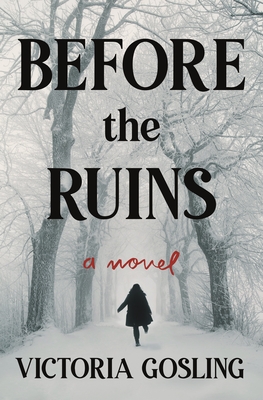
Before the Ruins, by Victoria Gosling

“The year Peter went missing was the year of the floods.” Thus begins this tale from Andrea (Andy) set in the present-day but reaching back twenty years to the summer of 1996 when she and her friends have finished their final exams. A bored teenager with few prospects, Andy enriches her life by coming up with games to play with her three best friends: Peter, Marcus and Em. The guardrails come off when Andy’s alcoholic mother predicts the apocalypse is about to occur—if the world is ending, their actions have no consequences—and the four friends take over an empty manor house near Marlborough in Wiltshire.


Learning that a valuable diamond necklace had been stolen at the manor fifty years earlier and never recovered, they embark on a new game of playing detective. Em acquires a cheap copy of the necklace—a tourist item in town—and they take turns hiding it, a game that has the added relish of perhaps actually finding the real necklace and changing their lives. Another teen, the suspiciously charismatic David, turns up one day, claiming to be a friend of the absent owners and quickly becomes a part of the group.  


Yet there’s an ominous push-pull within the group as they practice deceiving one another. Relationships fray; secrets and lies erode trust; betrayals lurk in the shadows. The story builds gradually, moving between the search for Peter in the present and unpacking the events of the past, turning them this way and that, looking at them anew.

Memory is a house, a castle with many rooms. Some of the rooms are deeper inside, honeycombed away. Each has a thousand keys – an image, a smell, a sound. Behind each door are a thousand other doors.

I was drawn to this novel because I like the narrator of the audiobook, Kristin Atherton, and because a reviewer compared it to Tana French’s work. My favorite is The Likeness of which I said, “French captures so well the fun of being part of a tight group of friends, when you’re young, and it’s all happening for the first time, and everything seems unbearably sweet.” Gosling’s story comes at youthful friendship from another angle, capturing its mystery and beauty, but also its fragility and fear.


To sleep on? Or to wake? This was the question facing me. To sleep, or to wake and face the reckoning, to find out what had been lost.

I thought Before the Ruins would be another in a long line of gothic mysteries about a narrator revisiting formative events in the past, secrets that come to light, etc. However, I underestimated the book. It rewards deeper investigation, from the pun in the title (before) to the use of diamonds as a MacGuffin to the sly use of imagery (floods, treasure, playing games, losing your nerve at the prospect of a leap).


Caught up in the story I noticed little else, but on reflection I wish we could have gotten to know the characters other than Andy a bit better. The way they are presented makes sense since we are getting the story through her point of view which comes with her own blinders; only near the end do their actions indicate more complexity. I would also have welcomed more description of the manor itself.


As a writer, several things in this book impressed me: the complexity of the narrative with multiple storylines and reveal after reveal; Gosling’s willingness to let the slow burn unfold in sentence after delicious sentence; and the way she hits the reader flat out near the end, signaling that whatever you thought the theme was, it’s so much more. No spoilers here, but be prepared to discover layers upon unexpected layers of this story.


Have you read a novel that turned out to be much more than you expected?


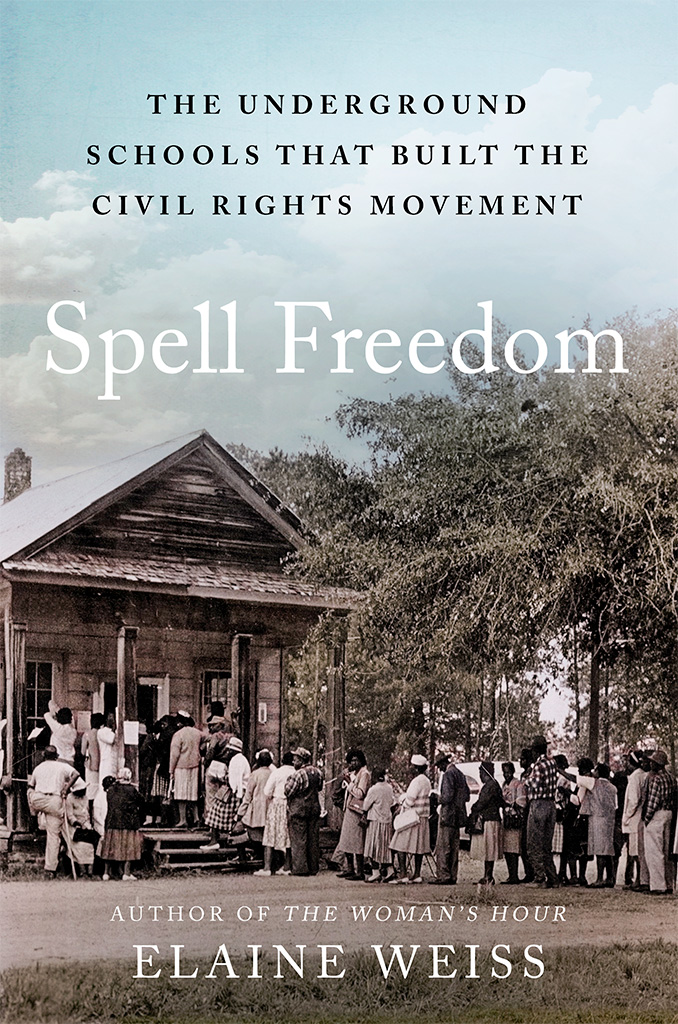
Spell Freedom, by Elaine Weiss

Many people contributed to the success—partial as it was—of the Civil Rights Movement of the 1960s. We’ve all heard the names of the famous leaders, their words and deeds. In this book, subtitled “The Underground Schools That Built the Civil Rights Movement,” Elaine Weiss tells the story of some of those we haven’t heard of, courageous people who came before the famous speeches and laid the foundations for success by creating the citizen schools that prepared Black Americans in the Jim Crow South to register to vote.

These unsung heroes had to start the school in secret, sometimes in the back room of beauty parlor, and create their own materials, adapted to the needs of an illiterate or barely literate adult population. Weiss doesn’t shy away from the difficulties, the terrible repercussions they all risked from a South wedded to White Supremacy.

Participants in the schools learned not just how to read and write, but also how to decipher the voter registration literacy tests intended to keep them from voting. They also learned what their rights were and gained the confidence to exercise them. By the time the Voting Rights Act passed in 1965, these secret schools had spread across the South, helping thousands of people register to vote.

I came to this book reluctantly when it was selected by my book club for this month. I figured I already knew about the Civil Rights Movement. I couldn’t miss it, growing up in Baltimore in the 1950s and 1960s. And then there are all the books, articles and discussions I’ve absorbed since. Yet once I started reading, I was hooked. And as it turns out, most of the book was new to me.

Weiss begins with the 1954 Brown v. Topeka Board of Education ruling that said racial segregation of public schools was unconstitutional. She shows how that news was received by Septima Clark, a 56-year-old teacher from South Carolina; Esau Jenkins, a Sea Island aspiring businessman and bus driver; and Bernice Robinson, a beautician from Charleston. The three of them understood that doing away with segregation would take work, dangerous yet necessary work.

Septima Clark came to the Highlander Folk School in rural Tennessee, a training ground for labor organizing created by Myles and Zilphia Horton that was pivoting to support civil-rights activism. Initially mistrustful of the fully integrated school, Mrs. Clark was shocked to share a room with a White person and sit at a table with White people for the first time. Yet the vision of White and Black people working together day after day to come up with practical plans for challenging segregation is one that would stay with her and encourage her for the rest of her life.

She brought Mr. Jenkins and Mrs. Robinson to Highlander. The compelling portraits of these three unlikely leaders fuel the story: ordinary people doing extraordinary things. The writing is clear and compelling; Weiss transforms her extensive research into riveting stories. We do meet the famous leaders in these pages but usually in the context of these unsung heroes.

Weiss also doesn’t shy away from the movement’s internal struggles and the sexism of its leaders. Most of all she brings home to the reader the terrible dangers faced by these teachers and organizers, as well as by everyone sitting in at a store counter or trying to register to vote. They are fired from jobs, kicked out of their homes, beaten and shot.

We need their stories today. We need to remember how hard they had to fight for the right to vote—now in danger once again—and that they did win again and again. We have much to learn from Mrs. Clark, Mr. Johnson, and Mrs. Robinson: the way they organised within their communities, found creative ways to help people, and got up each time they were knocked down.

Elaine Weiss kindly came to our book club meeting and proved to be a fascinating speaker with a sure command of her material. She said that her interest in this story began when she heard of the March 2019 firebombing of the current Highlander Center, complete with White Nationalist symbols. She wondered what this place could be doing that it should still be such a powerful symbol. 

Then she was curious about people like Septima Clark, whom most people haven’t heard of. She found a brief autobiography, Ready from Within, that Mrs. Clark wrote of her early life and an academic biography, Freedom’s Teacher, that focuses on her teaching techniques. In her research, Weiss was shocked by the systematic oppression and the economic punishment for attempting to vote. She reminded us that Septima Clark was financially insecure for the rest of her life; her friends had to get together to pay for her grave marker.

I hope many people will read this book. There is so much that will fire your imagination and strengthen your resolve in these dark times. Elaine Weiss said that in tough moments she often thinks What would Septima do? From now on I will, too.

Where are you finding courage these days?

Incidental Inventions, by Elena Ferrante

“I have to say that I write with greater dedication when I start digging into common, I would almost say trite, situations and feelings, and insist on expressing everything that—out of habit, to keep the peace—we tend to be silent about . . . I’m interested in the ordinary or, rather, what we have forced inside the uniform of the ordinary. I’m interested in digging into that and causing confusion, pushing myself to go beyond appearances.”

That’s Elena Ferrante in her essay “Digging,” one of 51 brief essays in this collection. Originally published in the Guardian every week for a year, she wrote them in response to a question from an editor. This was at her request, because she “had no experience with that type of writing” and was both “flattered” and “frightened.”

Oddly enough, that’s the same way Jan Struther (AKA Joyce Maxtone Graham) wrote the Mrs. Miniver columns. When the London Times wanted her to write a column about ‘an ordinary sort of woman – like yourself,’ she asked them to provide a question or prompt.

I did not expect much from these essays, each only about 500 words. And yet I found myself reading the next and the next, unable to stop until other voices called me away. Part of what makes them so addictive is that for all she talks about constructing a public image—“[Daniel Day-Lewis] is a sort of title by which I refer to a valuable body of work . . . If he should suddenly be transformed into a flesh-and-blood person, poor him, poor me.”—and for all she conceals her own identity, there is an openness in her writing that makes me believe she is opening her most secret self and telling the truth.

She writes about keeping a diary and why she avoids exclamation points, about lying and insomnia, about long marriages and her fear of plants. She writes about the positive side of change, and yet “We cannot tear off what once seemed to be our skin without pain; something endures and resists.” She writes about her favorite film and why it “seduces and sometimes scares me.” And every now and then she talks about writing.

In her introduction, she says she usually writes by “putting one word after another . . . what I find at the end—assuming that I find something—is surprising, especially to me. It’s as if one sentence had generated the next, taking advantage of my still uncertain intentions.” Yet here, constrained by time and space, she “rummaged through memory in search of small illustrative experiences; impulsively drew on convictions formed by books read many years ago . . . pursued sudden intuitions . . .”

And yet, each essay is tightly constructed. They begin with a clear statement such as: “I was a terrible mother, a great mother.”  Or “Stereotypes are crude simplifications, but generally they don’t lie.” Then we are off into memories and thoughts until a punchy last line, such as “We’ll always know too little about ourselves.”

These are the two sides of writing: the mystery of how one word or thought leads to another with sometimes surprising results and the careful crafting of that hot mess into a clear and cogent whole. She says:

My effort at faithfulness [in writing] cannot be separated from the search for coherence, the imposition of order and meaning, even the imitation of the lack of order and meaning. Because writing is innately artificial, its every use involves some form of fiction. The dividing line is rather, as Virginia Woolf said, how much truth the fiction inherent in writing is able to capture.

She admits that “The yearning to give written form to the world isn’t a guarantee of good literature.” Also, even when our efforts succeed, “We remain dissatisfied and, successful or not, the writing will continue to remind us that it’s a tool with which one can extract much more than we have been able to.”

Still, the energy that drives these essay, and all of her writing, is “the wonder—the wonder of knowing how to read, to write, to transform signs into things.”

The illustrations by Andrea Ucini at the start of each essay are not only charming, but also add another layer to the piece. The cover illustration of a woman peeking out from among the pages of a book is the one for “Keeping a Diary.”

What draws you to Elena Ferrante’s writing?