A Piece of Justice, by Jill Paton Walsh

Imogen Quy is a nurse at St. Agatha’s College in Cambridge University. Working part-time gives her the freedom to enjoy other activities like quilting, which is where the story begins. She and two friends must choose a pattern and fabric for a quilt that will eventually be raffled off for the Red Cross funds. This seemingly unimportant activity foreshadows what’s coming in this smart mystery.

The three have different ideas for a quilt pattern: one wants something simple and basic while another wants an elaborate pattern with lots of curves. Imogen likes patterns that are more complex: “one block merged with the next, so that the pattern shifted as you looked, part of one block completing squares or diamonds in the next.” So right in the first paragraph we know what sort of story we’ve landed in.

This sense of unease and shifting ground is reinforced on the next page: Imogen always starts out with fabric with  a “tasteful” pattern and “soft harmonising colors,” yet once she puts them together, she finds them boring. When her friend Patsy combines the most unlikely colors and patterns—orange fabric “printed in scarlet blotches” next to a bright turquoise—Imogen finds it unexpected and perfect.

As an independent woman, Imogen supplements her income by renting out her two spare bedrooms—currently to two undergraduate men—and her upstairs flat—now to Fran, a postgraduate student at St. Agatha’s. Fran has a problem: she needs to earn money for her living expenses, so she’s thrilled when the new chair of her department, Professor Maverack, offers her a job.

It’s a new department: Biography. In what seems an aside but is more foreshadowing, a brief conversation among dons gives us a history of biography going back to Plutarch. Their back-and-forth is enlivened by the theories of what is important in a life and how these theories have changed over time.

When Fran meets with Maverack, he tells her he’s been hired to write the biography of a recently deceased Cambridge don, Gideon Summerfield. Maverack doesn’t have time—he’s too busy with his own research–so he proposes that he pay Fran to be his ghost writer. Since the relationship between biography and autobiography is the subject of her dissertation, the job will also give her some good experience.

And the job should be easy because the person previously hired to write the book has already completed the research. When Imogen asks why Mark Zephyr didn’t finish the job, Fran breezily replies, “ ‘He died.’ ”  

When that research is delivered, the giant carton disintegrates “String snapped, corrugated cardboard tore open, and bundles and sheets of paper thumped and fluttered everywhere.” What a description! In it I can feel Agatha’s horror and dismay, knowing how hard it will be to restore any kind of order to the precious papers. As she and Fran find after much sorting, the disorder was there even before the box fell apart: different kinds of handwriting, seeming cross-references that don’t make sense, postcards with mysterious numbers on them.

When she finally creates a timeline, Fran finds that there is one summer that is not accounted for. Then Summerfield’s wife, the person who commissioned the biography, comes banging on Imogen’s door demanding that the papers be returned to her.

Such dramatic scenes punctuate this quiet mystery which also abounds in what Donald Maass calls microtension, described as “the line-by-line effect of creating uneasiness in the reader, which can only be relieved by reading the next thing on the page.” For example, Imogen pauses under a cherry tree on “a fine, crisp autumn day” when it is “just warm enough to sit for a few moments on a damp bench and relish the day.” All lovely, but there’s that damp bench.

Large and small moments like these create suspense that keeps the pages flying by. The shifting patterns of the plot also had my mind ticking over even when I tried to set the book aside for a while. I’m not into quilting these days, but Imogen is someone I’d love to sit down and work a cryptic crossword with. I like the way her mind works, sort of a modern Miss Marple. I’ll be looking for more books in this series.

What do you look for in a mystery—or in a quilt?

The Incredible Crime, by Lois Austen-Leigh

This has been my month for virtual travel: from a remote Finnish island to southern Virginia to Tuscany and London. Now this recently republished novel from 1931 takes me to East Anglia, a part of England I love, where we move between Cambridge and a manor in Suffolk.

Prudence Pinsent, a thoroughly modern woman in her thirties, lives with her father, the Master of (fictional) Prince’s College and a retired bishop. In her role as his hostess she’s perfectly proper but “she reserved to herself the right to swear like a trooper when she chose.” She attributes her independent spirit and unconventional behavior to “a far-back buccaneering ancestor.”

We meet her at a bridge party throwing a crime novel across the room in disgust. The conversation with her three friends, Cambridge wives, quickly turns from a discussion of novels and Cambridge gossip to a new and untraceable poison acquired by one of the odder professors. Then the professor husband of one of the wives enters: “About  the last thing in the world that Skipwith looked like was what he was, an eminent scientific professor. He was not only washed, he was even shaved.”

 A few days later she heads out to visit her beloved cousin at his home Wellende Old Hall, a (fictional) isolated manor among the marshes and canals of Suffolk, that has its own ghost. The description of the autumn drive, passing Ely Cathedral, the Devil’s Dyke, and Bury St. Edmunds, invites the reader in.

Already the academic feeling of the University was beginning to fade, and the feeling of the country-side, of long furrows made by the plough, of thickets scratching in a stubble field, of tired cart-horses going home o’ nights, was beginning to supersede it—the beech woods were all turned to a russet brown, mingling with the soft tints of the ploughed fields and the hedgerows.

As she approaches Wellende, the startling white of gulls against the soft brown fields and then the cold, grey North Sea call up the atmosphere of the fens with their secret streams and ghosts and history of smuggling.

The plot spins out around smuggling, spies, and drugs seasoned with academic satire, country house mayhem, and modern romance. Also, hunting, so be warned.

In Kristen R. Saxton’s introduction, she points out that, “Just as The Incredible Crime combines conventions from the traditions of village and college mysteries, it also offers a sparkly union of the Jane Austen novel of manners with the mystery genre.”

Lois Austen-Leigh is said to have written her novels at the very desk used by her great-great aunt, Jane Austen, later donated to the British Library by Lois’s niece. Lois wrote four crime novels during the Golden Age of British mystery, the period between WW1 and WW11. Her uncle, Augustus Austen-Leigh, was Provost of King’s College, Cambridge, hence her understanding of University doings. She did war-work in both wars and was friends with people like Benjamin Britten and M.R. James. All this makes me curious about her life, and I’m looking now for a biography of her.

The intriguing cover design is based on a British Rail poster from the 1920s, reproduced on the back cover. I learned about this novel and many more set in Cambridge from a post by Anne Kennedy Smith on Substack.

Although the plot is a bit thin in this period piece, the atmosphere and setting are delightful. I found the story great fun and a welcome step back into a different time and place.

What is your favorite Golden Age mystery?

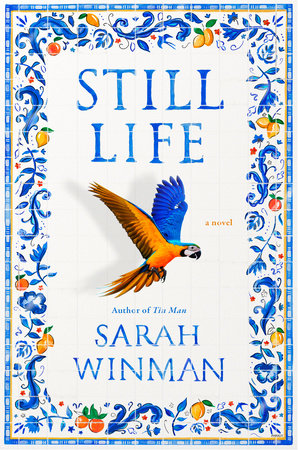
Still Life, by Sarah Winman

Tuscany, August, 1944. Taking a walk after lunch, Evelyn Skinner sees a jeep and waves it down. As an art historian with decades of experience, she’s in Italy to help with the artworks from museums and churches that have been hidden in the hills during the war, identifying them and assessing the damage. She asks the young English soldier driving the jeep, Private Ulysses Temper, to help her contact the Allied Military Government.

Even in this brief scene, these two people capture the imagination, while Tuscany itself seizes the senses. Ulysses is on his way to pick up Captain Darnley, who has opened his eyes to glories of Italy and art and literature, and takes Evelyn along. Then we jump to London where we meet Ulysses’s wife Peg, Col who runs the bar where she sings, Cress who converses with a tree, the parrot Claude who lives in the bar and quotes Shakespeare, and others. From that point on the novel alternates between London and Florence.

I picked up this book wanting to spend some time in Italy in the middle of the twentieth century. The description are luscious, but the true beauty of the book comes from showing how the fragile threads we throw out to each can, over time, become a beloved community and a motley group of eccentrics can become a family.

There’s never any confusion with the wide cast of characters spread between the two cities. Each person vibrates with life, their adventures by turns dangerous, hilarious and poignant. We meet them as they gather in the sort of places we’ve started to call the commons: a pub, a café, a plaza. We follow them over the decades as they, and we, begin to see how these relationships that began so casually have become a web that can support them during the worst times.

Some people in my book club were bothered by the many unlikely coincidences, but most of us enjoyed the fairy tale quality of the story. We also appreciated the subtle use of symbols and the way different kinds of arts were folded into the story: music, paintings, sculpture, poetry, literature. The descriptions of places and people seduced me, and the dialogue is some of the best I’ve read.

However, the decision to present dialogue without quotation marks poses a problem. It’s a cool, modern thing to do, but this fiction is set in the past. Worse, I often couldn’t tell what was dialogue and what was narrative. Some stories manage to make this clear without the punctuation, but not this one. Most of the people in my book club had trouble getting into the book; they started and stopped, tempted to give up, or they had to reread parts near the beginning a few times before taking the plunge. They thought the lack of quotation marks played a part in their confusion.

Writers often struggle with beginnings and endings. In some of my reviews, you’ll find a complaint about an ending that seems too abrupt or that ties things up too neatly. Here, I found the opposite problem: the last section should have been cut. Unfortunately it leaves behind the rich cast of characters we’ve come to love in order to follow a single one, and introduces a slew of new characters here at the end of the book. The section is well-written, but unnecessary to the story. It felt like padding. I was disappointed, too, that it took some wonderfully evocative allusions from earlier in the book and ran them into the ground, just in case we didn’t get them. 

Yet even with these concerns, I don’t know when I’ve enjoyed a novel as much as this one.  Each time I picked it up, I felt as though I were sinking into a rich, delicious dream. What a wonderful, luxurious summer read!

What novel set in Tuscany have you enjoyed?

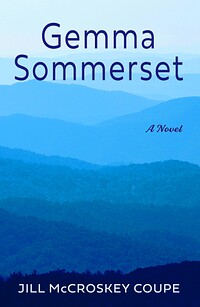
Gemma Sommerset, by Jill McCroskey Coupe

The story opens at a summer camp in the Blue Ridge mountains where fourteen-year-old  Gemma undergoes a transformative experience. In 1957 girls’ roles were strictly defined, especially in the South, but away from home and facing a surprising danger, she finds a new sense of herself. The problem then becomes what to do with that when she returns home.

Gemma is part of an in-between age group: too late to be part of the WWII generation and too soon for the Sixties with its peace-and-love. This new novel from Jill Coupe explores how throughout her life she balances her desire for adventure and accomplishment with society’s restraints and expectations.

She dreams of studying French in Paris but ends up in a traditional marriage, home with a baby while her husband continues up his professional path. I’m reminded of Philip Larkin’s poem “Afternoons” where he describes young mothers watching their children at a playground, ending with: “Something is pushing them / To the side of their own lives.” Gemma’s one joy is watching the sun rise each morning, its beauty a reward, its freshness a promise.

The wonderful editor Dave King once wrote about what he called the gentle genre: “straightforward tales of ordinary people in mostly every-day, low-key situations.  No psychotics, no wrenching twists, no gore, no vampires or werewolves or demons.” These stories were popular in the early part of the 20th century, from writers such as Jan Karon, Angela Thirkell, D. E. Stevenson, Elizabeth Cadell, R. F. Delderfield, and Wendell Berry.

The problem with writing such a story is how to create enough tension and suspense to propel the reader through to the end when you can’t throw in a gang war or vampire to liven things up. Dave King defines two ways to keep a gentle story going without letting it become either boring or saccharine. One is for the author to pay close and detailed attention to the characters so the reader will recognise that even small things hold deep meaning for them. The other is to set the story in a small town where you can’t avoid interactions with your neighbors, even if their opinions differ from yours.

In terms of the first method, we do get to know Gemma and the experiences that shape her and her refusal to be pushed to the side of her life. Since the story is told from her point of view, we learn about the other characters as she does. As for the second, her life revolves around her family so they, rather than the small city where she lives, become the community she defines herself within. Conflicts with her parents, husband, and daughters animate Gemma’s story as she strives to carve out a space where she can be herself while still caring for them. As Dave King says, gentle books—of which this is one—are “driven by love.”

Stories driven by love are a much-needed balm these days. Gemma Sommerset reminds me about the importance of family and community. We might disagree, but we can do so with love. So maybe Gemma’s not so far away from the Sixties generation as I thought.

What novel have you read lately that reminded you of what really matters?